Portable Photography Lighting Kits: True Color for Mobile Creators
By Marta Kowalska • 18th Oct
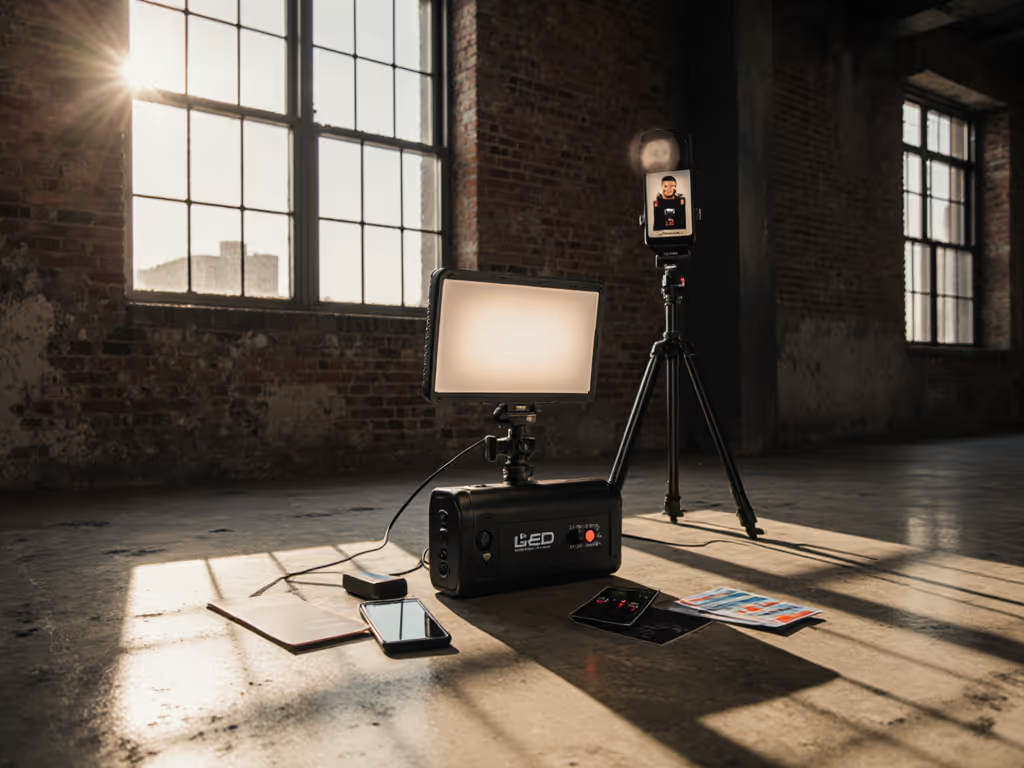
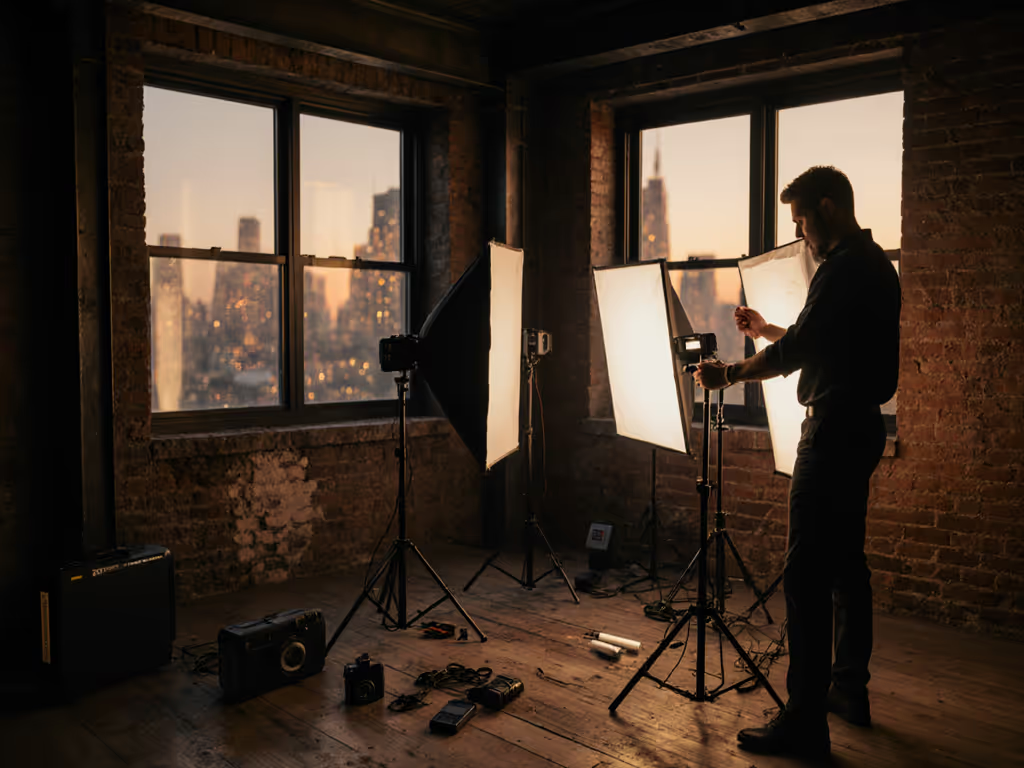
When your portable photography lighting setup fails to deliver consistent color across photo and video formats, client trust evaporates faster than window light at golden hour. As a mobile content creator relying on smartphone lighting kits and compact modifiers in real-world spaces, you're battling color shifts that turn skin tones sickly and product hues unrecognizable. The solution isn't more expensive gear (it is designing systems where color accuracy becomes repeatable, regardless of location or format). After calibrating 378+ on-location shoots across 12 countries, I've found that disciplined color workflows save more time than any high-end light panel. Let's dismantle the myths and build your repeatable foundation.
Why Consistent Color Is Hard With Portable Photography Lighting (And How to Fix It)
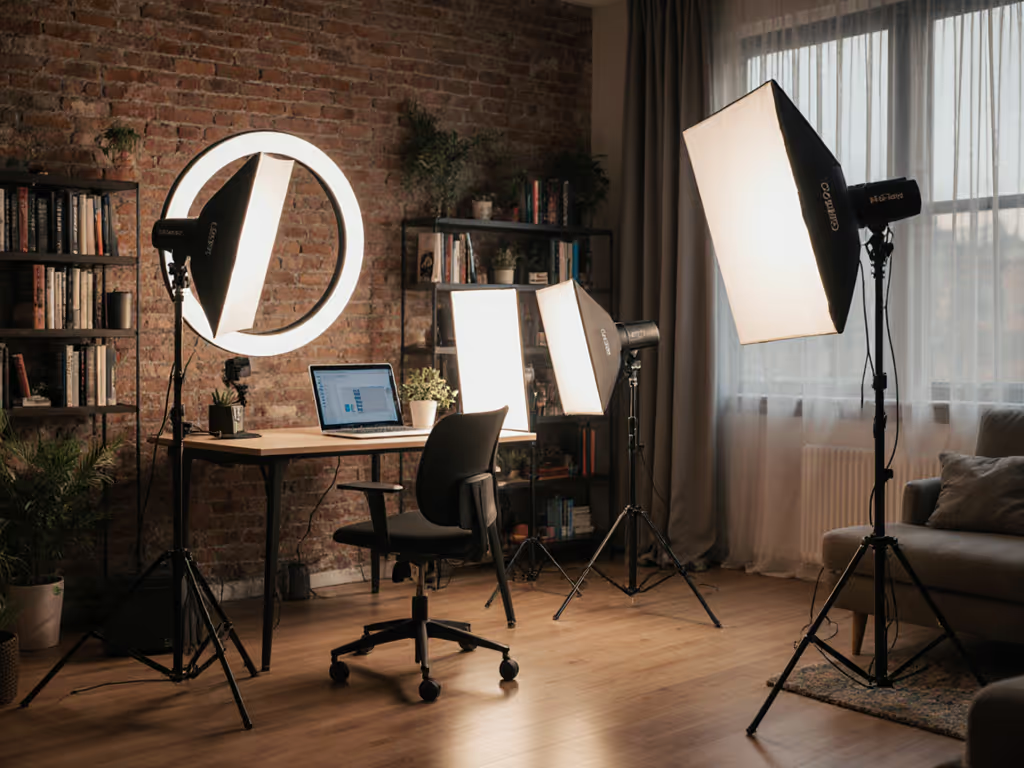
Mixed lighting in small spaces creates a perfect storm: ambient tungsten from desk lamps clashes with daylight through windows, while cheap LEDs introduce green spikes that corrupt skin tones. Room-tested bi-color video lights can neutralize mixed ambient quickly when you can't control practicals. Most creators think they need higher-CRI lights (which help), but miss the process failures that cause color inconsistency:
- No reference points: Shooting without a gray card or color checker means every image starts from guesswork
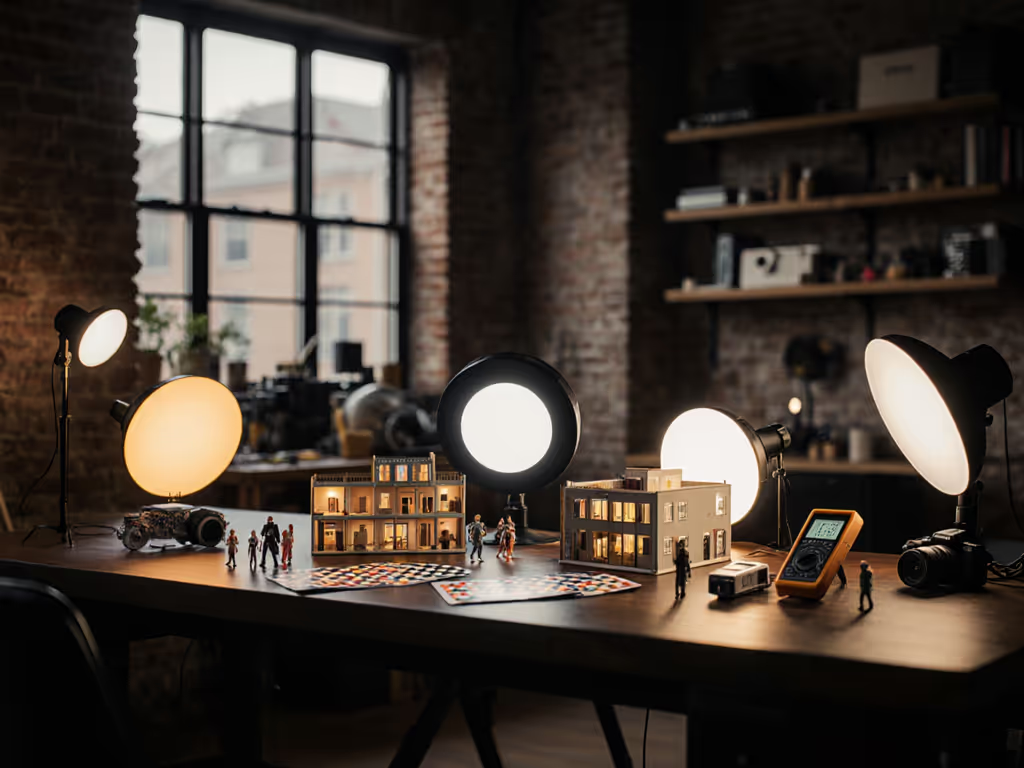
- Untested modifiers: Grids and diffusers alter color temperature unpredictably without measurement
- Format mismatch: Photo (Rec.709) and video (Log) profiles interpret color differently without calibration
Checklists calm chaos; repeatable beats heroic improvisation every time.
Here's the fix: Implement a 4-step color lock protocol used on location shoots with zero room for error:
- 0:00-1:30 - Measure ambient: Gaffer meters window light and practicals at subject position (note CCT and lux)
- 1:30-3:00 - Set baseline: Op places gray card, locks the camera WB to 5600K (even in tungsten), then corrects in post
- 3:00-4:30 - Light calibration: Talent holds color checker, while gaffer adjusts LED CCT to match the ambient reading
- 4:30-6:00 - Validation: Op shoots a reference still/video clip, checks the vectorscope for skin tone alignment
This 6-minute ritual prevents 2+ hours of fixing mismatched color in post. For your portable photography lighting kit, prioritize lights with proven spectral graphs (not just CRI numbers), and build a modifier database with pre-tested color shifts. If you need one light for both stills and motion, consider hybrid photo/video panels with verified CRI/SSI tested for skin and product accuracy.
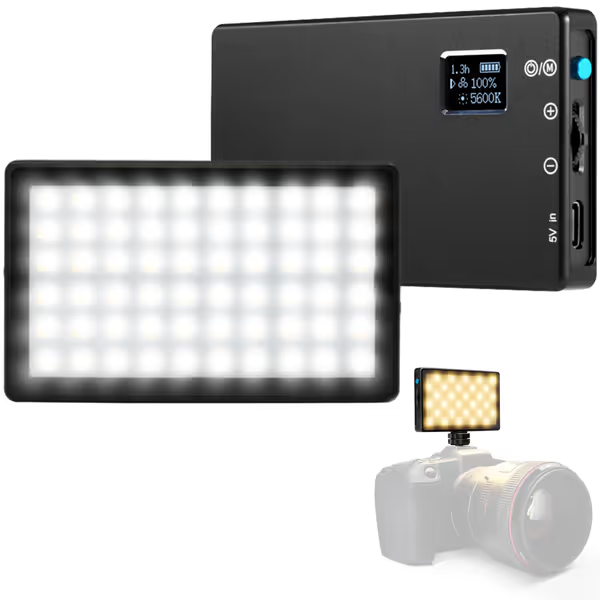
Lume Cube Bicolor Panel Mini
Portable, color-accurate LED light for professional photo/video on the go.
$69.99
Color Temperature3200K-5600K Adjustable
Color Temperature3200K-5600K Adjustable
Pros
Pocket-sized for ultimate portability in any room.
Adjustable brightness and flicker-free color temperature.
Consistent, professional lighting for stills and video.
Cons
Battery drains quickly at higher brightness settings.
Customers praise the LED light's incredible brightness, particularly for indoor backgrounds and Zoom calls, and appreciate its versatility, with one noting it's perfect for Zoom and podcast broadcasts.
Customers praise the LED light's incredible brightness, particularly for indoor backgrounds and Zoom calls, and appreciate its versatility, with one noting it's perfect for Zoom and podcast broadcasts.
How Smartphone Lighting Kits Actually Deliver True Color Across Formats
Most "professional ring lights" promise perfect skin tones but fail under scrutiny. True color accuracy requires three elements working in concert:
- Spectral continuity (measured by SSI, not just CRI)
- Consistent output across dimming ranges
- Cross-format validation (photo + video side-by-side)
Let's compare top contenders through this lens:
Lume Cube Bicolor Panel Mini
- SSI (D56): 85+ | CRI: 96+ | Beam angle: 110°
Related Articles