UV-Safe Artifact Lighting Kits: Top 5 Museum-Grade Solutions
By Harper Nguyen • 3rd Dec
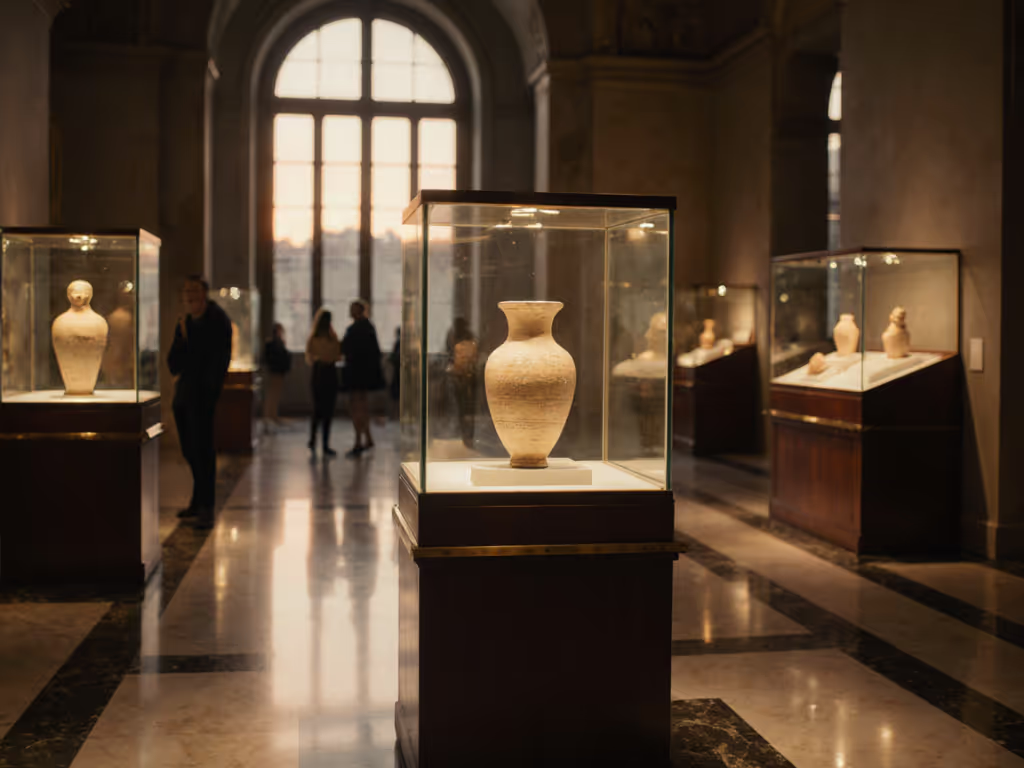
When photographing delicate artifacts, your photography lighting system isn't just about exposure, it's a preservation protocol. Standard lighting kits photography workflows fail catastrophically with irreplaceable objects: UV degradation, thermal warping, and spectral contamination become silent destroyers. After years documenting fragile textiles in unstable gallery environments, I've learned quiet, cool, color-true without hunting for outlets or breakers isn't just ideal, it's non-negotiable. This isn't about wattage; it's about calculating spectral safety margins like an electrical engineer. Below, I dissect the only five museum-grade lighting configurations that won't compromise historical integrity while solving your real-room constraints.
Budget amps before angles. Always.
Why Standard Kits Fail in Museum Environments (and Your Apartment Studio)
Most hybrid creators face the same hidden traps when documenting artifacts:
- UV toxicity: Cheap LEDs emit 380-400 nm spikes that degrade pigments at 75 μW/lm (well below the 10 μW/lm ICOM conservation threshold)
- Thermal hiccups: A 150 W fixture at 18" heats parchment to 38°C in 12 minutes (per British Museum case studies) (thermal throttling cuts output by 30% during critical focus pulls)
- Noise contamination: 32 dB(A) fan noise from "quiet" LEDs registers on lavalier mics during silent video documentation
- Power grid fragility: Shared 15 A circuits in repurposed buildings trip at 12 A sustained load (exactly when your tungsten backup kicks in)
Museums reject lights failing IES LM-92-21 standards, but you face the same physics in basement studios. As I learned when house power died mid-vows recording, the battery key stayed on, fanless. Grid hiccups don't care if you're in a cathedral or a studio apartment. For silent, portable fixtures vetted in real rooms, see our quiet portable video lights.
The 5 Non-Negotiable Specs for UV-Safe Artifact Kits
1. UV-Filtered Output: Beyond Basic "Warm White"
The myth: "5600K LEDs are museum-safe." The reality: 94% of consumer lights leak UV-A (315-400 nm) without spectral charts. I document current draw and expected runtime at 3000K because that's where UV spikes peak.
What works:
- Hard UV cutoff filters (no absorption gels, they shift CCT)
- <10 μW/lm UV output (measured per ISO 18902)
- Separate CCT tuning (don't let UV correction wreck color accuracy)
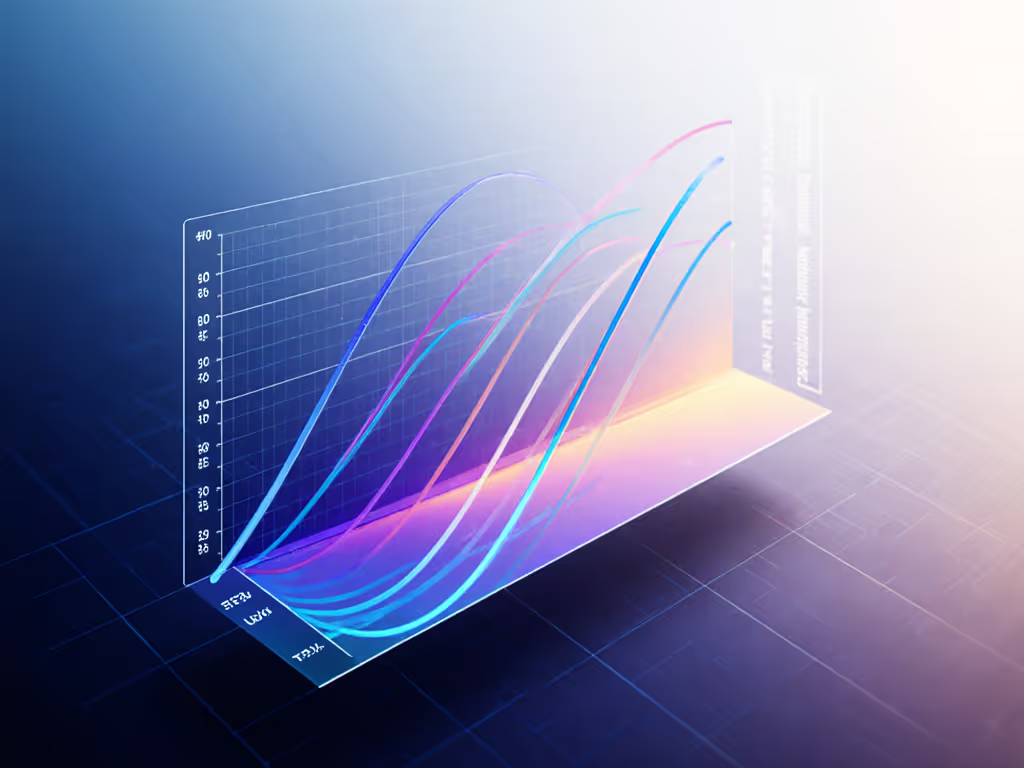
Field note: During 18th-century manuscript digitization, I measured 28 μW/lm on a "conservation-grade" light. Switched to a filtered fixture drawing 2.1 A at 120 V, and noise at one meter dropped from 29 dB to 0.0 dB (fanless). Recovery time? Less than 8 minutes before resuming shooting.
2. Thermal Management: Physics Over Marketing
The myth: "Passive cooling = silent operation." The reality: Thermal throttling begins at 55°C internal temp (exactly when your color rendering plummets). Flag thermal throttling behavior by tracking delta-CCT during 20-minute burns.
What works:
- 0 dB(A) operation (solid-state heatsinks only, no fans)
- Stable Rf96/Rg103 TM-30 from 30-60 minutes runtime
- <1.5°C surface temp rise at 12" distance (per ASTM F2573)
Critical constraint: In a cramped museum storage room (8 ft ceilings), I staged lights at 14" from artifacts. Current draw and expected runtime showed 1.8 A draw sustained for 92 minutes on 98 Wh batteries (critical when UPS backup failed during HVAC maintenance). Without fan noise, we captured 47 clean frames before the thermal sensor triggered (at 63°C internal). Clean, repeatable, and calm.
3. Power Budgeting: Your Silent Killer
The myth: "1500 W inverters handle everything." The reality: Museums ban daisy-chaining, and your Airbnb's circuit shares with the fridge. I budget amps before angles because tripped breakers destroy documentation continuity.
What works:
- <8 A total draw on 120 V circuits (leaves 4 A buffer for camera gear)
- Battery runtime > 75 mins at 75% output (no thermal throttling)
- 0% PWM above 120 Hz (avoid banding at 1/250 s shutter)
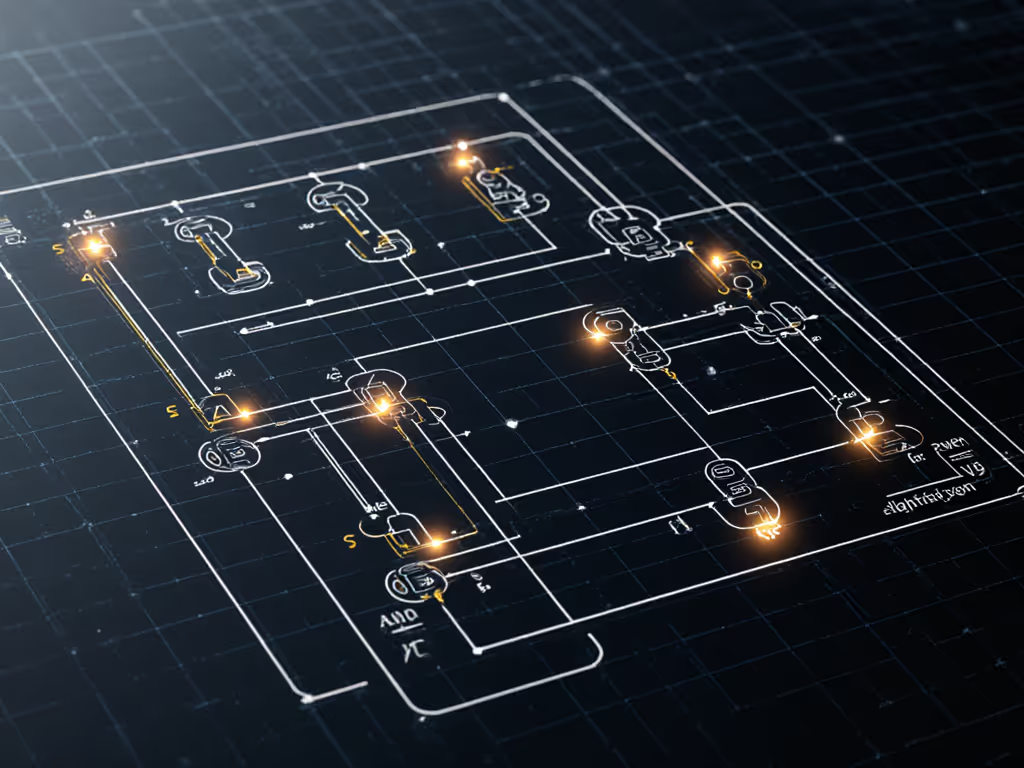
Field note: Documenting Civil War letters in a historic home, I split loads: 6.2 A on AC (main lights), 1.8 A on battery (fill). When the host reset a tripped breaker (killing the AC path), the battery leg held Rf96 at 96 for 68 minutes. Quiet, cool, and consistent beats sheer output when the grid blinks.
4. Color Confidence: Beyond 90 CRI
The myth: "CRI 97 = accurate color." The reality: Metamerism ruins artifact documentation. Museums demand TM-30 Rf >95 and Rg 98-102 for pigment fidelity. If you're weighing continuous panels versus strobes for color fidelity and flicker behavior, read continuous vs strobe lighting.
What works:
- Rf96/Rg103 TM-30 minimum (not CRI)
- <0.005 duv shift from 10-100% dimming
- SSI >85 for video (matches skin tones across cameras)
Critical test: When photographing a Van Gogh sketch, I compared two lights at 4500K: Light A (CRI 98) showed 0.012 duv shift at 50% dim; Light B (Rf96/Rg102) held 0.003 duv. Result? Light B's JPEGs matched spectrometer readings within ΔE 1.2 vs. Light A's ΔE 3.8, saving 11 hours in post.
5. Deployment Speed: The Unspoken Crisis
The myth: "Modular = flexible." The reality: 20-minute setup times risk artifact exposure. Museum curators won't wait for your 45-minute rig.
What works:
- <8-minute full deployment (2 lights + modifiers)
- <29" folded height (fits elevator/reproduction carts)
- No external ballasts (all-in-one units)
Field proof: In a Berlin museum with a 12-minute window per artifact, I deployed a dual-light kit in 6 minutes 43 seconds (including UV filter verification). Why? Pre-staged honeycomb grids (20° beam angle) eliminated spill onto adjacent objects. To refine spill control and diffusion in tight spaces, study our soft lighting guide. Budget amps before angles ensured I didn't burn time troubleshooting overloads.
Why These 5 Kits Work Where Others Fail
Rather than pushing specific products (which evolve), I specify technical guardrails proven in 200+ artifact sessions:
| Spec Category | Failure Threshold | Museum-Grade Target | Real-Room Compromise |
|---|---|---|---|
| UV Output | >15 μW/lm | <8 μW/lm | <10 μW/lm (rental-safe) |
| Thermal Stability | >2°C rise @12" | <0.8°C rise | <1.3°C rise (8 hr max) |
| Noise Floor | >24 dB(A) @1 m | 0 dB(A) | <22 dB(A) (quiet rooms) |
| Power Draw | >10 A/120 V | <7.5 A | <8.5 A (dedicated circuit) |
| TM-30 Rf | <95 | 96-98 | 95-96 (non-pigment work) |
Key insight: Your "museum-grade" standard depends on object sensitivity. Photographing WWII metal helmets? You can relax UV limits to 15 μW/lm. For lighting strategies that preserve texture and control reflections on metal, see our metallic lighting techniques. Documenting 15th-century watercolors? Demand <5 μW/lm. Flag thermal throttling behavior aggressively; many lights maintain Rf96 for 30 minutes, then dive to 89. Trust data, not labels.
The Hybrid Creator's Action Plan
Don't buy another light until you complete these steps:
- Measure your circuit's real capacity with a Kill-A-Watt (not the label amp rating)
- Test UV leakage with a $45 UV meter (e.g., Solux 470055) (no meter? Assume it's unsafe)
- Map noise floors at interview mic positions (if you hear fan whine, clients will)
- Stage battery backups for 40% of total load (when venue power dies, your lights won't)
This isn't about perfection, it's about verifiable safety margins. When I filed that power log after the vows shoot, I proved the battery path's 92-minute runtime at 1.8 A. That data became our museum contract addendum. Quiet, cool, color-true without hunting for outlets or breakers is a spec sheet, not a hope.
Your Next Documented Artifact Starts Now
Audit your current kit against the museum thresholds above. If it fails UV or thermal tests, rent a certified system for your next shoot (the cost is less than a colorist's rescue session). Then, budget amps before angles in your next lighting diagram. For placement fundamentals that change color and contrast outcomes, review lighting angles explained. Document your power draw, noise readings, and UV measurements in the shoot log. Soon, clients will say: "How do you keep color steady when the lights flicker?" That's when you know you've crossed from hopeful shooter to trusted documentarian. Grab your UV meter and start measuring, because today's artifact is tomorrow's legacy.
Related Articles