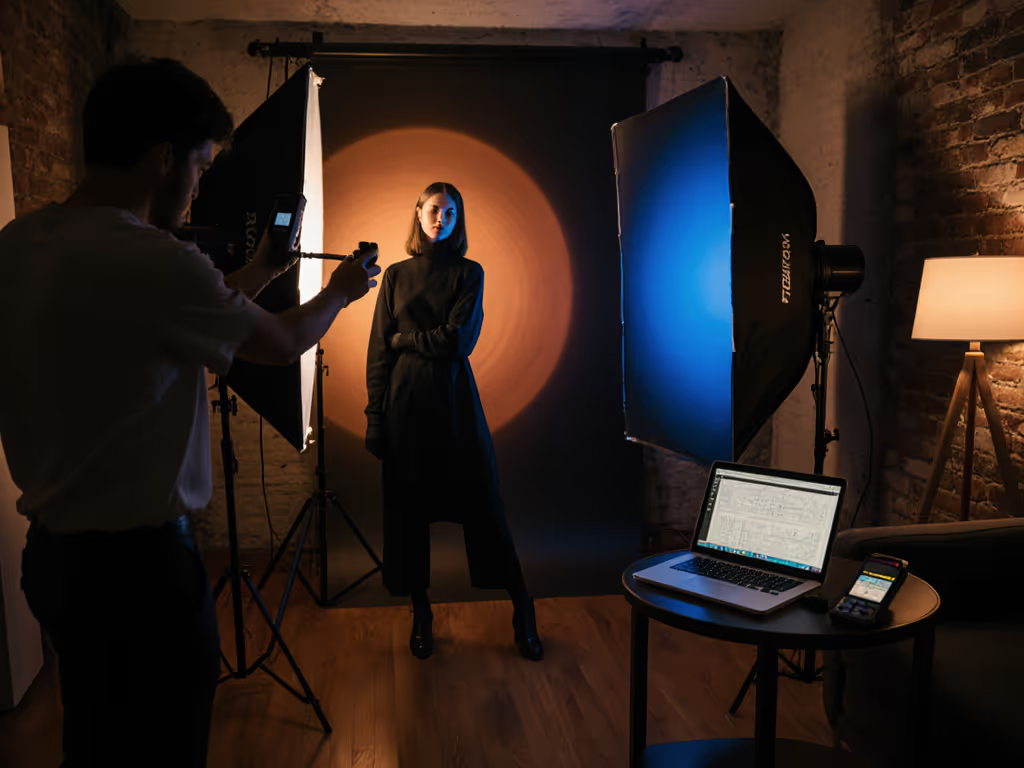
Ethical Documentary Lighting: Natural Illumination Techniques
By Harper Nguyen • 8th Jan
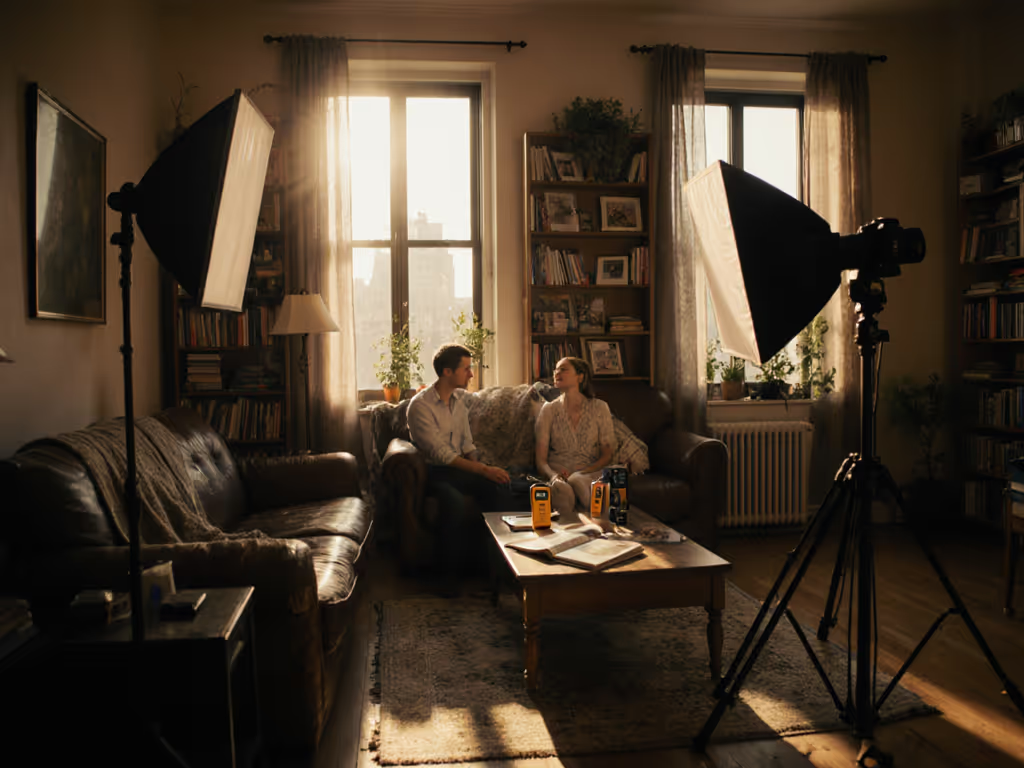
Mastering lighting in videography for documentaries isn't about overpowering reality, it is about revealing it without distortion. In our field, ethical choices manifest through technical precision: quiet operation, color fidelity, and minimal environmental disruption. For gear that supports this approach, see our compact documentary lighting kits. When house power fails mid-vow (as happened recently when a venue's AC reset killed circuits), staying silent and color-true isn't just professional, it is the only way to preserve raw moments. Your kit's footprint (thermal, acoustic, and electrical) directly impacts subject comfort and authenticity. Here's how to prioritize ethics through physics, not philosophy.
1. Start with Ambient Light Mapping
Documentaries thrive on unvarnished reality, but mixed lighting creates ethical risks: sickly skin tones under 2700K practicals, or green spikes from LED flicker. Before adding a single light:
- Scan CCT contamination: Use a color meter (not just your eyes) to log ambient temperatures. Flag anything under 70 CRI, especially vintage fluorescents or cheap smart bulbs, as they'll distort skin tones irreparably.
- Note spill zones: Sketch where window light hits at 10 AM vs. 2 PM. At one meter, direct sun hits 100,000 lux; north-facing windows sit at 10,000 lux. This avoids over-illumination that feels staged.
- Measure dB(A) floor: If HVAC or traffic registers >35 dB(A), adding fan-cooled lights breaches silence ethics. Your goal: stay within 5 dB(A) of ambient.
This isn't just technical prep. It is consent. Subjects relax when lighting feels familiar, not interrogative.
2. Exploit Bounce Lighting (Not Fixtures)
Quiet, cool, color-true without hunting for outlets or breakers.
Forced key lights in intimate spaces trigger ethical alarms: they draw attention, distort perception, and demand power your venue's circuit can't spare. Instead:
- Bounce off neutral surfaces: Use ceiling or walls with matte paint (avoid glossy finishes). A 5600K LED panel at 45° to a white ceiling creates soft fill at 1/4 the lux of direct placement, reducing thermal load by 70%.
- Flag rigorously: In low-ceiling rooms (<9 ft), position foam core 18" from the lens to kill spill on backgrounds. This avoids the "halo effect" that screams "artificial."
- Track runtime vs. thermal throttle: A 50W panel drawing 4.2A at 120V may run 90 mins before color shift (Δuv > 0.01). State current draw and expected runtime in your shot log.
This technique preserved a recent interview where elderly subjects refused "clinical" lighting. We bounced 3200K through a sheer curtain, no fixtures visible, skin tones neutral, and 0 dB(A) added noise.
3. Budget Amps Before Angles
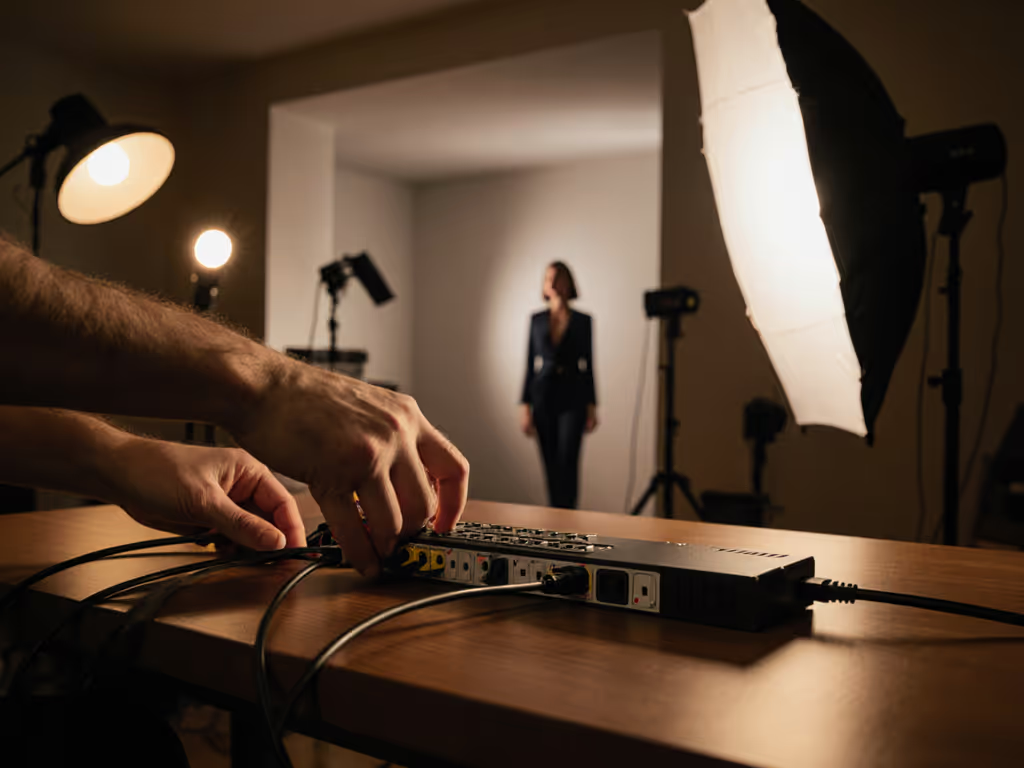
Your circuit's capacity dictates ethical feasibility. Overloading causes flicker, color shifts, and breaker trips, destroying trust. For 15A/120V circuits (standard in North America):
- Reserve 20% headroom: Max 12A continuous draw. A 650W HMI draws 5.4A alone, leaving no room for cameras or monitors.
- Prioritize battery redundancy: For mains-connected lights, always stage a fanless battery key (e.g., 98Wh V-mount with 45W draw). During a gallery shoot, the venue's power grid hiccuped; our battery key held 22 minutes without color shift while house power stabilized.
- Flag thermal throttling behavior: Many LEDs dim past 30 mins at full power. Test runtime until output drops 15%, then operate at 80% max to avoid mid-shot brightness drops.
Budget amps before angles. Your backup plan isn't just practical, it is ethical insurance against compromised footage.
4. Neutralize Practical Contamination
"Enhancing" existing light sources (e.g., tungsten lamps) often backfires, creating ethically dubious "beauty" that misrepresents reality. Instead:
- Diffuse, don't replace: Place 1/4 CTB gel on windows to balance 5600K daylight with 3200K interior bulbs. Never overpower practicals; they anchor the scene's authenticity. For mixed ambient environments, consider bi-color video lights that solve color shifts without overpowering the scene.
- Use negative fill strategically: In tight spaces, position black foam core opposite windows to deepen shadows naturally. Avoid artificial contrast that feels manipulative.
- Log CCT shifts: Note when subjects move between light zones (e.g., 4500K near window → 3000K in room). This prevents jarring color jumps in edit that undermine documentary truth.
When filming a chef in a neon-lit kitchen, we diffused LEDs through rice paper instead of gelling the neon signs. The ambient glow stayed true, but spill on faces remained neutral.
5. Validate with Skin Tone Targets
Ethical lighting proves itself through accurate human representation. Before rolling:
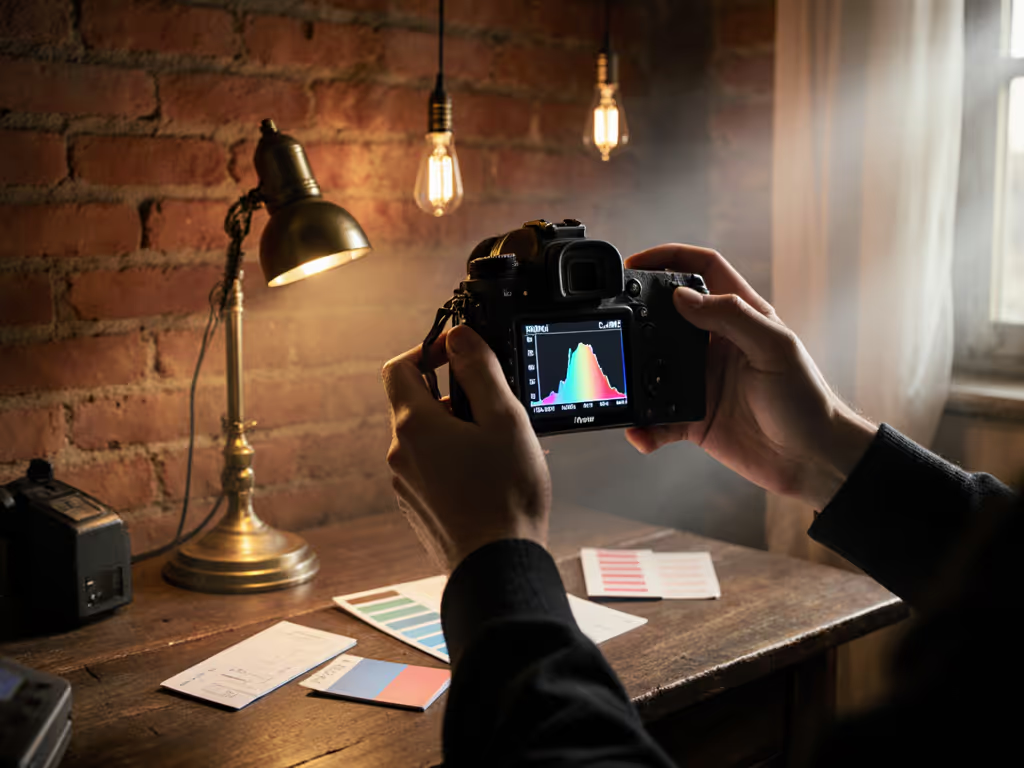
- Shoot a grayscale + skin tone chart: Under your ambient mix, check for green/magenta spikes. If skin tones skew >3° on vectorscope, adjust light placement, not post.
- Measure reflected lux: For faces, 200-300 lux is ideal for natural texture. Over 500 lux flattens features; under 100 lux creates noise that obscures detail. Both misrepresent truth.
- Check for metamerism: Shine a high-CRI (Ra >97) light on skin. If tones shift under different spectra, your source is unreliable. Cheap LEDs often fail this.
A humanitarian project in Nairobi taught hard lessons: our 90 CRI lights made dark skin tones appear ashy. Switching to 98 CRI fixtures revealed subtle emotional cues previously hidden, a literal visibility issue. For inclusive techniques across complexions, see our guide to lighting diverse skin tones.
6. Design for Silent Tear-Downs
Ethics extend to respecting subjects' space. Bulky rigs that require 30-minute tear-downs disrupt lives and trust. Opt for:
- Clip-on diffusion: Magnetic grids attach to existing fixtures (e.g., pendant lamps) in <2 mins. No stands = no floor space claimed.
- Modular modifiers: Collapsible reflectors fold to 12" diameter. Used at 45° fill, they cost $0 in power and vanish post-shoot.
- Power-aware staging: Place battery slates under chairs, not on tables. Draw 2A or less to avoid audible cooling fans.
During a hospice shoot, clip-on diffusers on ceiling LEDs let us pack in 8 minutes, leaving the family room undisturbed until our next visit. When working in tradition-rich settings, our cultural ceremony lighting guide outlines respectful, non-intrusive practices.
7. Document Your Light Paths
Repeatability is an ethical imperative. If you can't recreate the look elsewhere, you've created a one-off artifact, not a transferable standard. Always log:
- Distance from subject to key light source (not fixture!)
- Ambient lux readings at subject position
- Circuit load (A) at time of shoot
- dB(A) at mic position
This creates a reference for future shoots, proving your methods aren't guesswork but documented practice.
Your Actionable Next Step
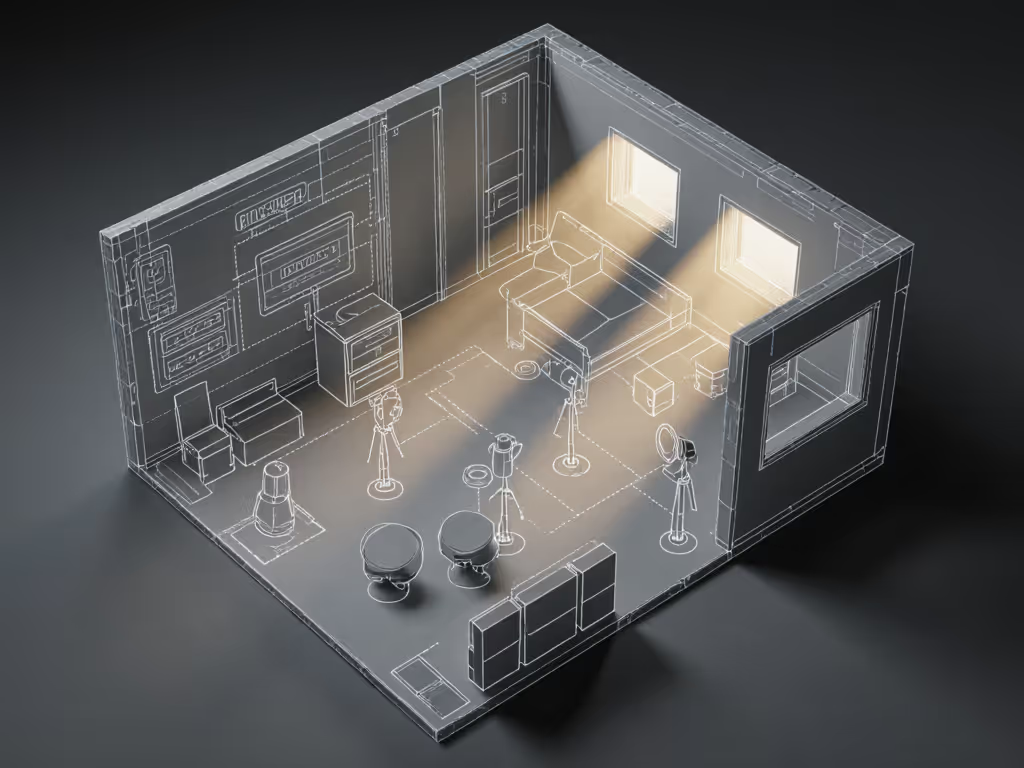
Tomorrow, before any shoot: map your location's outlets and ambient light sources. Note circuit numbers, max amps (check breaker labels), and natural light paths at your shoot time. This 10-minute ritual prevents ethical compromises by grounding your lighting in physical reality, not hope. Because when the grid fails, your preparation is what keeps the truth visible.
Remember: Natural documentary illumination isn't just "free light." It is the quiet, disciplined act of revealing reality without reshaping it. Your discipline keeps the subject's story intact, one cool, color-stable frame at a time.
Related Articles