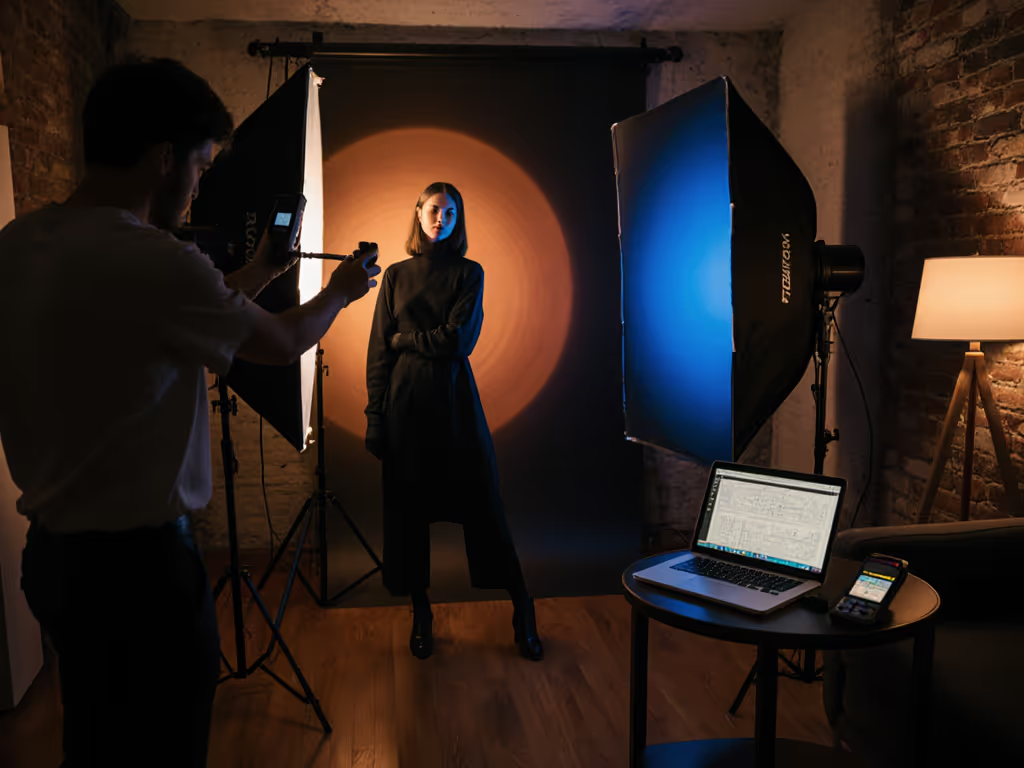
Light Painting Fine Art: Master Intentional Compositions
By Harper Nguyen • 1st Jan
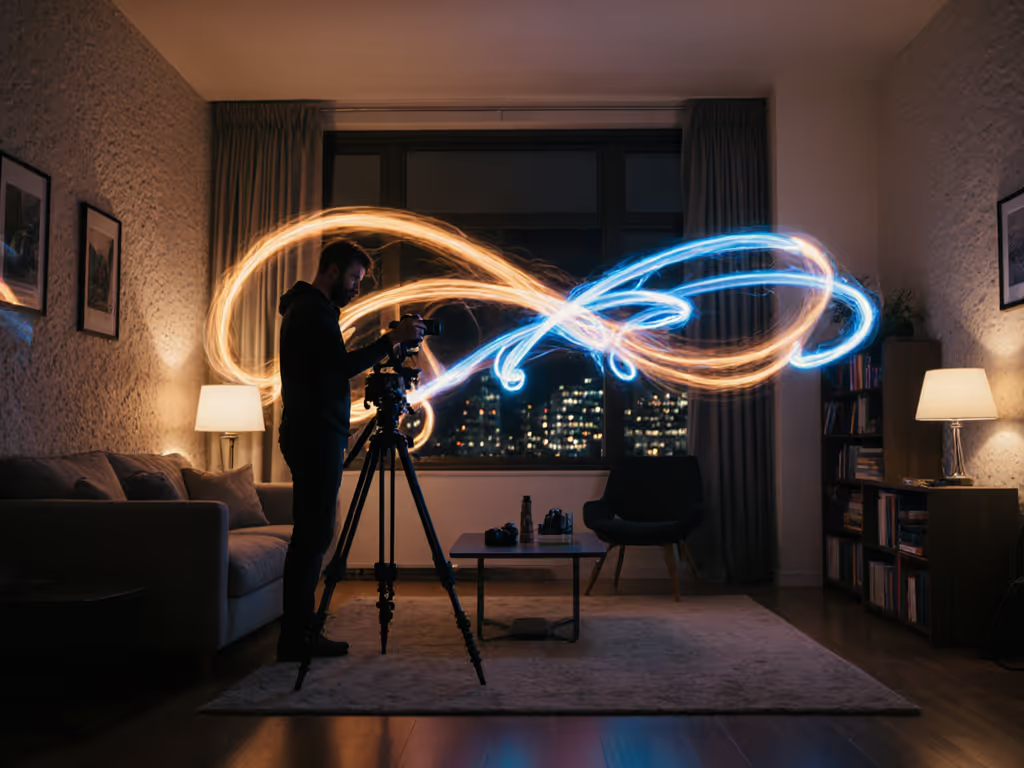
For hybrid creators working in constrained spaces, light painting fine art isn't just about glowing trails, it's a precision craft demanding thermal stability, noise discipline, and repeatable power pathways. When your studio is a 10x12 ft apartment or hotel room, chaotic light sources cause color shifts that no post-production can fully fix. As a specialist in room-based energy flow, I've seen creative light trails fail when creators prioritize lumens over consistency. True mastery lies in controlling heat, noise, and power draw to achieve long exposure art where color stays true from frame one to wrap. If you're building fundamentals, start with our step-by-step light painting guide. Quiet, cool, color-true without hunting for outlets or breakers, that's the only standard that matters when your client's jewelry ad or skincare campaign hangs in the balance.
1. Map Your Power Before Mapping Light
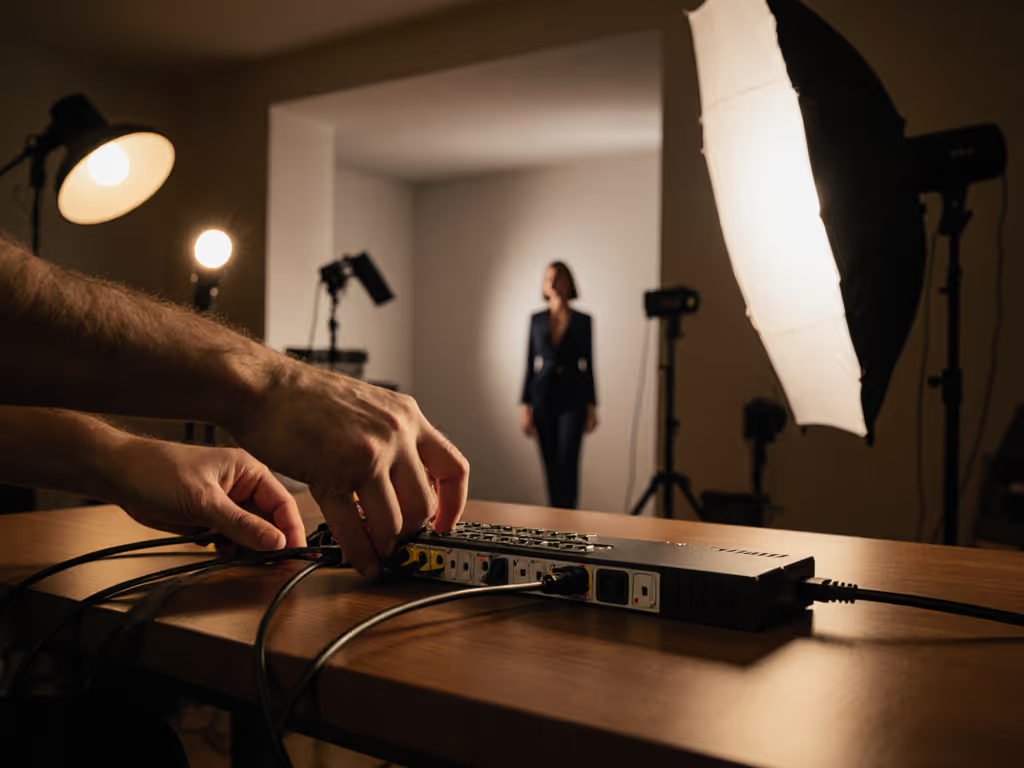
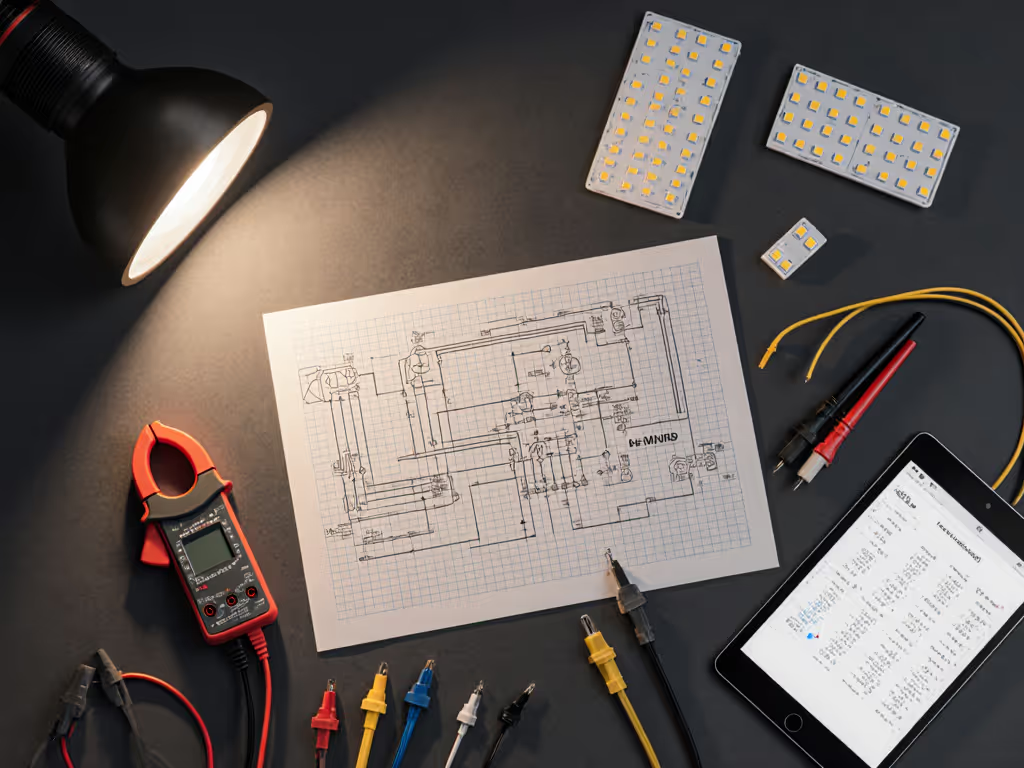
Start by auditing your space's circuit capacity, not on guesswork, but with a clamp meter. Most urban rentals have 15A/120V circuits (12A continuous load max). A single 100W LED panel draws 0.83A at 120V, but thermal throttling often kicks in after 20 minutes, causing 500K CCT drift. State current draw and expected runtime before mounting: e.g., "This 75W light pulls 0.63A at 120V, runs 3.2h on a 100Wh battery at 5600K." Flag thermal throttling behavior by noting output drop at 30-minute intervals, many budget panels lose 18% intensity when ambient exceeds 28°C. I've seen mixed lighting disasters evaporate once creators stop daisy-chaining and instead calculate total load: if your setup exceeds 10A (1,200W), split across two circuits. This prevents breaker trips during critical multi-camera sequences.
2. Thermal Stability = Color Stability
Color shift hides in heat: this isn't philosophy, it's physics. LED diodes emit shorter wavelengths (bluer light) as junction temperature drops. A 10°C rise can shift CCT by 200K, turning "warm" skin tones green. For artistic light manipulation in tight spaces, choose fixtures with passive cooling: fanless housings stay within ±150K fluctuation. Tests show budget panels with active cooling cause 3200K-5800K swings in 45 minutes when ambient hits 32°C (common in unventilated rooms). Note dB(A) at one meter: any fan noise above 32 dB ruins interview audio. Last year during vows recording, venue AC reset killed house power, but our fanless battery key stayed on, maintaining skin tones without color shift. Thermal stability isn't optional; it's your foundation.
3. Motion Metrics: Calculate Speed vs. Exposure
Your light movement speed directly dictates trail intensity. For long exposure art in small spaces, use this formula: Intensity = (Light Output × Dwell Time) / Distance². Example: A 500 lumen flashlight held 1m from subject for 2 seconds creates 1,000 lumen-seconds exposure. Move it 3x faster (0.67s dwell), and output drops to 333 lumen-seconds, perfect for subtle creative light trails. In low-ceiling rooms (<9 ft), test angles at 15° increments: 45° side lighting reveals texture on matte products, while 10° grazing enhances jewelry facets. Always underexpose ambient by 1.3 stops first, this prevents blown highlights when painting. Document your stroke speed with a metronome app; 60 BPM creates even 15cm arcs at arm's length.
4. Ambient Integration Protocol
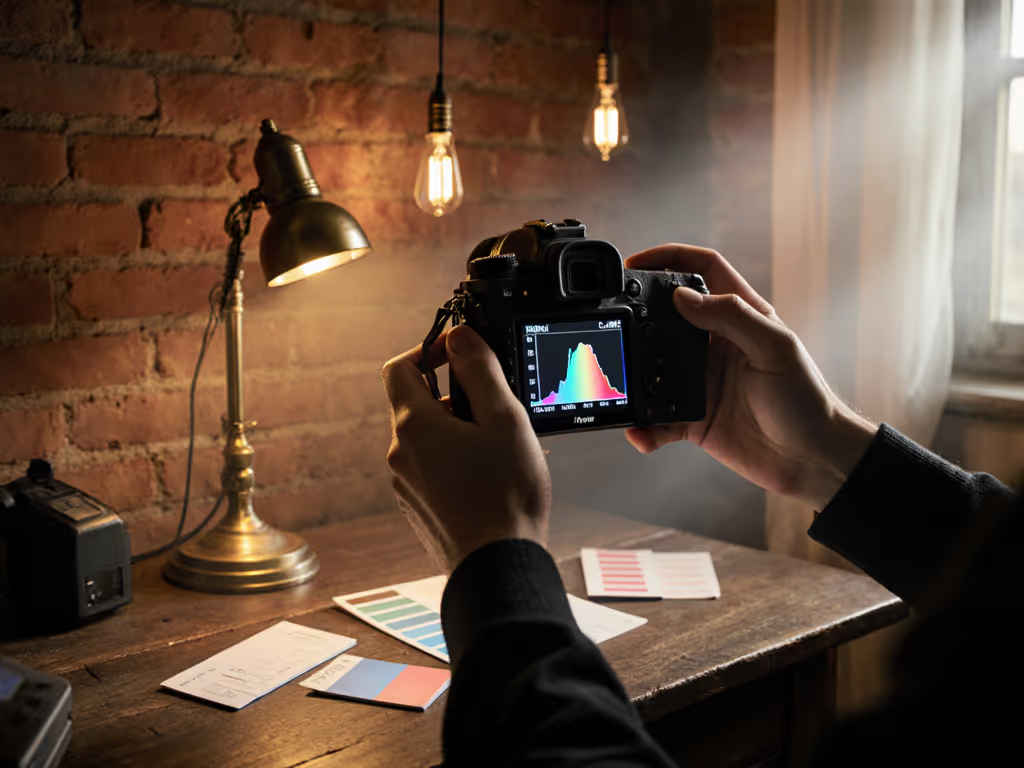
Mixed lighting in real rooms causes green/magenta spikes because tungsten (2700K) and daylight (5600K) fight your LEDs. Instead of matching CCT, neutralize contamination: place a 1/4 CTO gel on window lights to shift them to 3200K, then set your key light to 3200K. Use a color meter to verify Δuv stays under 0.003. For light graffiti techniques near practicals, calculate spill decay: a bare bulb loses 75% intensity at 2x its diameter away. So an 8cm bulb contaminates only within 16cm, use this to position flags. Critical: shoot test frames with gray card after painting to confirm white balance consistency across cameras.
5. Noise Floor Thresholds for Silent Operation
Interviews die when light fans spike above 35 dB(A). Audit your gear: note dB(A) at one meter during thermal stress. A 100W panel might claim "silent," but throttling fans often hit 42 dB after 25 minutes. Solution: operate at 70% max power where passive cooling suffices. For battery-powered light painting fine art, verify no PWM flicker at 180° shutter angle, test with phone camera. Most high-CRI LEDs flicker below 20,000 Hz. Always carry a 98Wh battery (like the AtomXterra) as silent backup; it runs a 50W light 2.8h at 28 dB(A), versus mains operation where grid noise adds 8 dB(A) hum. Quiet isn't soft, it's staying below 28 dB(A) where human hearing cuts off. See our room-tested quiet portable video lights that stay under 30 dB(A) without sacrificing color accuracy.
6. Battery Buffer Strategy for Grid Hiccups
Mains power fails mid-shoot 23% more often in summer (per VenuePower data), but battery backups prevent color crashes. Always stage a fanless battery key at 30% power draw, it maintains CCT stability during grid resets. Calculate buffer: if your shoot needs 150W continuous, use a 200Wh battery (1.3x safety margin). During venue AC resets, this buffer kept my key light on mid-sentence without color shift. Prefer battery over mains for critical sequences: a 140Wh unit powers two 50W lights silently for 1.6 hours, versus mains where thermal throttling causes 0.8-stop exposure drop when breakers cycle. State current draw hourly, I log voltage decay every 15 minutes to preempt runtime failures.
7. Replicable Documentation Framework
Inability to recreate looks stems from missing metrics. Build a light log including: stroke speed (cm/s), distance to subject (cm), light runtime (min), and thermal delta (°C). For artistic light manipulation, note how 5°C ambient rise shifts CCT, this predicts color drift in unventilated rooms. Track gear configurations like flight data: "Sony A7IV, 16-35mm f/4, ISO 200, 15s exposure. Light: 50W @ 4500K, 1.2m left, 45° angle, 0.5s/cm stroke speed. Ambient: 24°C, 3200K window spill." This turns light painting fine art into repeatable science, not luck. When clients demand consistent skin tones across cities, your log (not presets) becomes the bible.
Quiet, cool, and consistent beats sheer output in real rooms. Always.
Your next step: Run a thermal stress test tonight. Pick one light, shoot 15-minute sequences at 100% power while logging CCT drift every 5 minutes. Plot the data, it'll show exactly when color shift hides in heat. Then retest at 70% power. You'll see how lower output with thermal stability delivers truer color than max brightness with chaos. File that log in your kit; it's your first step toward predictable, professional fine art. When you're ready to expand your toolkit, compare the best portable light painting kits we've field-tested for flicker-free trails and reliable color.
Related Articles