Soft Light vs Hard Light: Skin Tone Accuracy Guide
By Chidi Okoye • 9th Nov
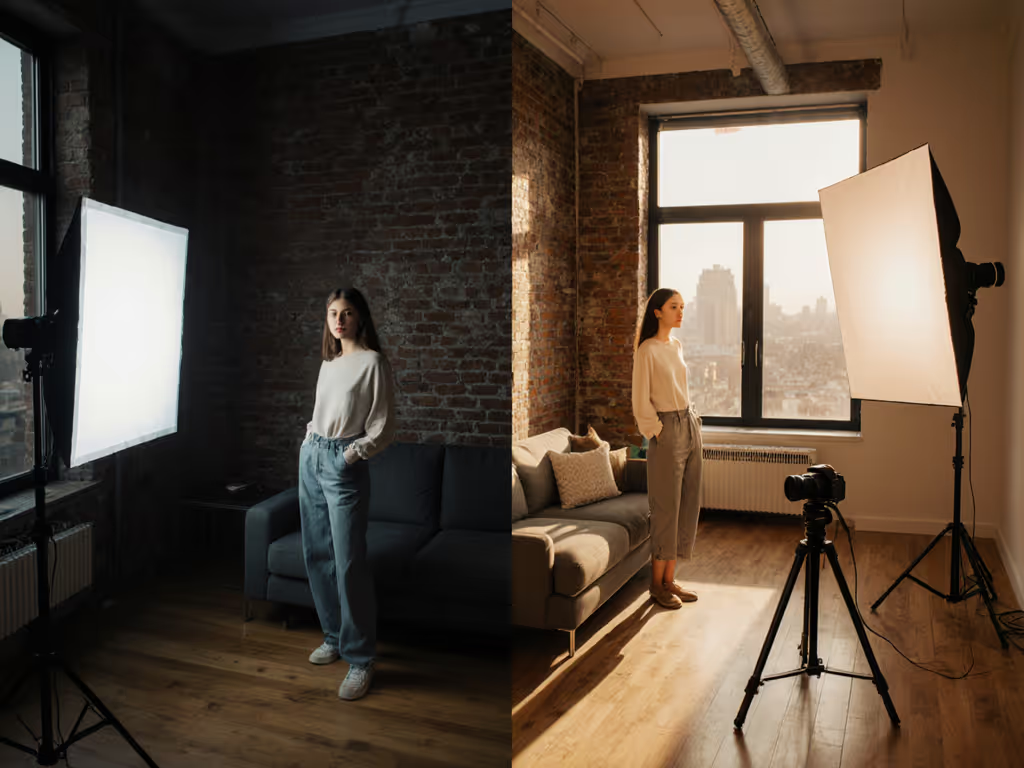
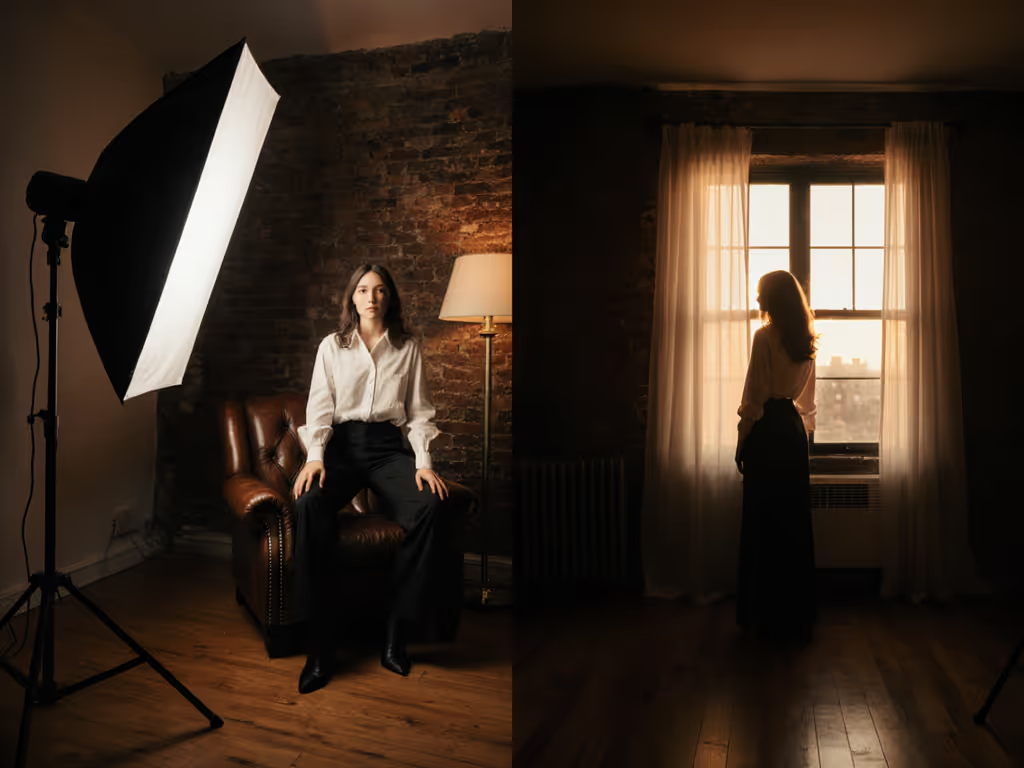
When evaluating soft light vs hard light for portrait work, most discussions fixate on shadows and contrast. But for skin tone accuracy (a concern that keeps hybrid creators awake at night), lighting quality comparison demands spectral analysis beyond surface-level observations. I've diagnosed countless 'sickly skin' complaints that traced not to lighting type, but to unmeasured spectral gaps in the source's SPD (Spectral Power Distribution). A recent retail shoot revealed an emerald dress appearing muddy gray on camera while shoppers saw vibrant green, a direct result of a 620 nm SPD gap under cheap LEDs. This article dissects hard and soft light through a spectral lens, prioritizing what matters most: honest skin reproduction under real-world constraints. If you work across photo and video, compare high-CRI hybrid video lighting panels for reliable skin tone fidelity.
Defining Light Quality Through Spectral Reality
Light quality characteristics extend far beyond shadow softness. While traditional photography categorizes light as:
- Hard light: Small source (relative to subject), abrupt shadow transitions, high contrast
- Soft light: Large/diffused source, gradual shadow transitions, low contrast
...this framework ignores spectral integrity (the invisible factor that breaks skin tones). Hard light sources like the sun or bare LEDs often have narrow SPD peaks, causing metamerism (color shifts under different illuminants). Soft light modifiers (softboxes, diffusion panels) can worsen spectral issues if they absorb critical wavelengths.
Skin tones first; everything else negotiates around them.
Critical distinction: A light's physical hardness (shadow edge) ≠ its spectral hardness (SPD continuity). You can have:
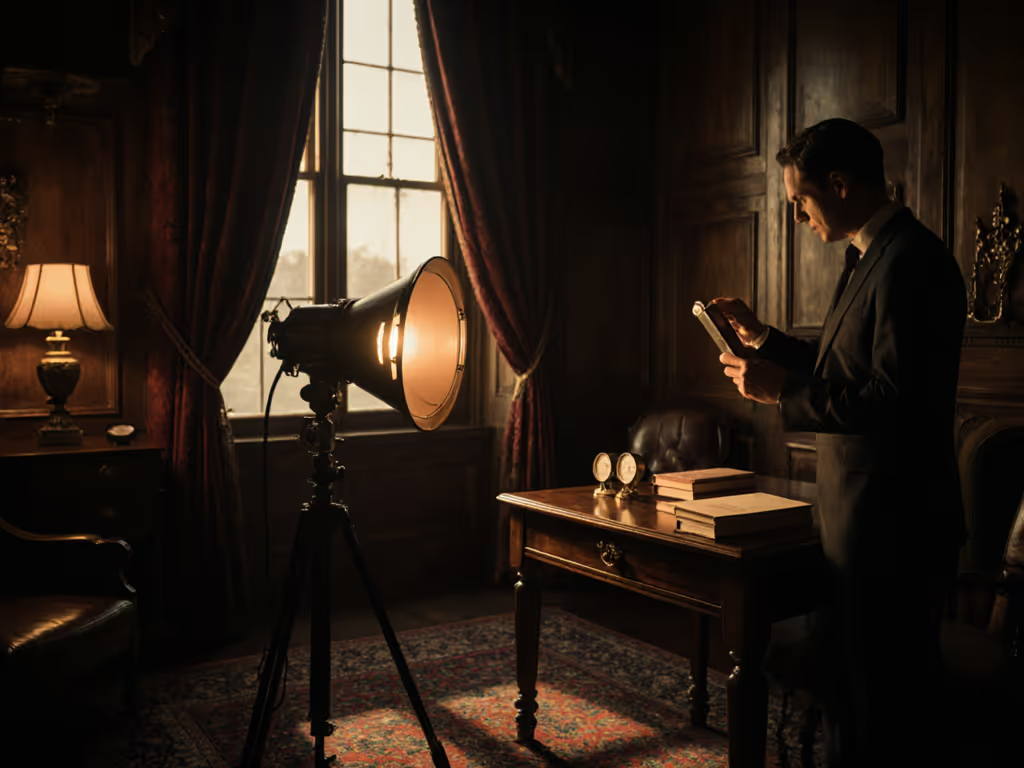
- A 'hard' source (e.g., Fresnel) with smooth SPD
- A 'soft' source (e.g., cheap LED panel + diffuser) with spiky SPD
This is why shadow edge comparison alone fails skin tones. TM-30-18 metrics quantify this:
- Rf (Fidelity Index): Measures how accurately colors render (target 90+ for skin)
- Rg (Gamut Index): Indicates saturation shift (75-105 is safe for skin)
Clinical example: A 3200 K LED panel (Rf 75, Rg 120) will render skin as oversaturated orange, even with perfect diffusion. A 5600 K Fresnel (Rf 95, Rg 98) creates crisp shadows but renders skin neutrally. Spectral continuity trumps diffusion. For practical methods to shape softness without hurting color, see our controlled diffusion guide.

How Hard Light Undermines Skin Tone Accuracy
Hard light sources (whether the sun, bare bulbs, or unmodified LEDs) threaten skin fidelity through two mechanisms:
- Narrow SPD peaks: Cheap LEDs often spike at 450 nm (blue) and 610 nm (amber) but tank between 500-600 nm. This creates a gap where melanin reflects light (550-600 nm), muting warm undertones.
- Result: Caucasian skin appears waxy, deeper tones look ashy
- High CCT shift sensitivity: A 100 K change in hard light causes significant green/magenta shifts. Skin tones drift faster than product colors under inconsistent hard light.
Real-world impact: On a hotel room shoot, a 5600 K LED panel (Rf 82) created harsh shadows and made skin tones shift magenta when subjects moved 6 inches toward a window. Measuring SPD showed a 40 nm gap at 589 nm, critical for rendering hemoglobin. The solution wasn't diffusion; it was swapping to a higher-Rf panel before adding diffusion.
Hard light's texture rendering differences also introduce skin-perfecting illusions:
- Deep shadows hide pores/wrinkles (benefit for video B-roll)
- But high contrast exaggerates redness (rosacea, blushing) due to elevated Rg values
Takeaway: Hard light isn't inherently 'bad' (it is dangerous without spectral validation). If your hard source exceeds Rf 90, it is safer for skin than a low-Rf 'soft' alternative. Unsure which tech fits your workflow? Start with continuous vs strobe lighting.
Why Soft Light Isn't Automatically Safe for Skin Tones
Softening light through diffusion or bounce changes SPD, often degrading skin tones. Common pitfalls:
- Diffusion panels: Absorb 15-30% of light, disproportionately cutting short wavelengths. A 3200 K source (Rf 85) becomes Rf 78 after 1-stop diffusion, shifting skin yellow.
- Umbrellas/softboxes: Fabric modifiers introduce metamerism. White shoot-through umbrellas reflect 5-10x more light at 450 nm than 600 nm, muting warm tones. To choose the right modifier for color-faithful softness, review our softbox shapes compared.
- Bounced light: Walls alter SPD based on paint SPD. A 'white' wall with 5% reflectance at 600 nm desaturates skin reds.
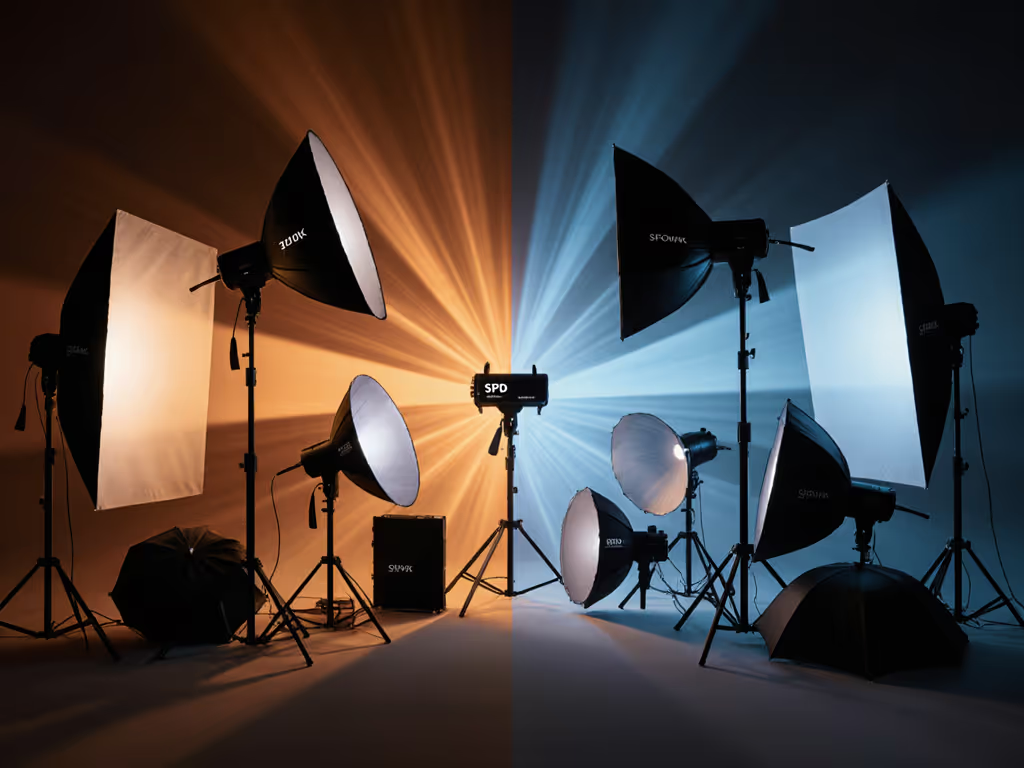
Case study: A freelancer used a 5600 K LED panel + 48 inch softbox (Rf 88) for a makeup shoot. Skin looked perfect on camera, but client complaints revealed inaccurate product colors. Spectral analysis showed a 20% drop at 620 nm (critical for red lipsticks). Removing the softbox and using a grid increased Rf to 92 while maintaining soft shadows via proximity. Softening via distance preserved SPD integrity better than diffusion.
Soft light's lighting ratio effects further complicate skin accuracy:
- Low ratios (1:1.5) minimize texture but amplify SPD flaws (for example, green spikes become uniform discoloration)
- Higher ratios (1:3) reveal texture but localize spectral errors to shadows
Key insight: Soft light exposes systemic SPD issues. If skin looks 'flat' under diffused light, check your source's Rf, not just your modifier.
Actionable Framework for Small-Space Skin Accuracy
Based on 200+ real-room shoots, these steps prioritize skin tone integrity in constrained environments:
1. SPD Check Before Modifying
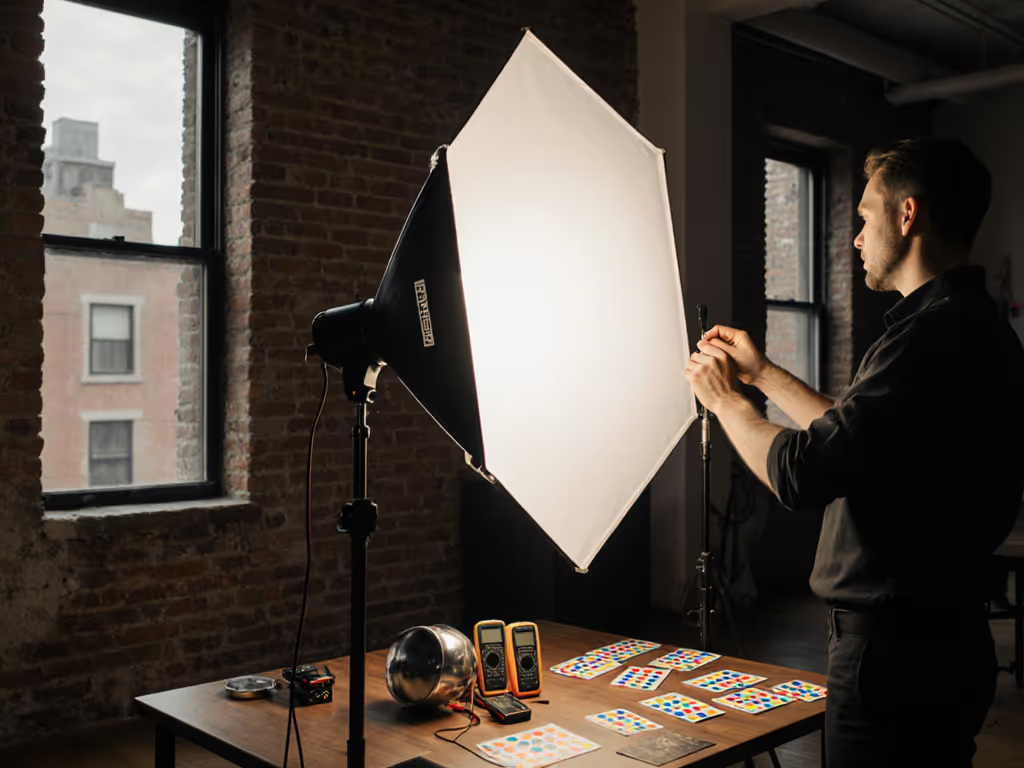
- Use a pocket spectrometer (for example, X-Rite i1Basic) to verify Rf > 90 before adding diffusion. If Rf < 85, swap lights, not modifiers.
- Focus on 550-600 nm. Drop below 80% relative irradiance here? Avoid for skin work.
2. Softening Strategies That Preserve SPD
| Technique | SPD Risk | Small-Space Viability |
|---|---|---|
| Bounce via ceiling | High (unless ceiling SPD neutral) | Low (ceiling under 9 ft) |
| Softbox diffusion | Medium (fabric SPD varies) | Medium (18 in boxes fit tight spaces) |
| Distance-based softening | Minimal | High (position light 3-5 ft from subject) |
| Grids + barn doors | None | High (control spill without spectral loss) |
3. Hard Light Recovery Protocol
When stuck with high-contrast light (for example, window + tungsten practicals):
- Measure mixed SPDs: Target dominant source (for example, windows at 5600 K). Use an Rf-focused camera profile to compensate for gaps.
- Add negative fill: Black foam core opposite hard light deepens shadows without altering SPD (safer than diffusion for skin tones).
- Exploit texture: For video, use hard light at a 30 degree side angle to minimize facial shadows while retaining texture. Avoid frontal hard light.
Profiles are tools, not crutches. They compensate for measured SPD gaps, not lazy lighting.
Why Skin Tones Are the Ultimate Metric
Hybrid creators obsess over product color, but skin tones expose lighting flaws faster:
- Skin reflects 30-70% of light across 400-700 nm, a wider range than most products
- Melanin/hemoglobin peaks at 540 nm/580 nm, right where cheap LEDs dip
- Human vision is hyper-sensitive to skin color shifts (evolutionary trait)
Proven workflow: On a cramped apartment shoot with mixed LEDs:
- Identified SPD gap at 620 nm causing green skin cast (Rf 78)
- Swapped to a high-Rf COB panel (Rf 93)
- Used a 22 degree grid (not diffusion) to soften shadows
- Built a camera profile targeting the measured SPD, no skin correction in post
For on-set techniques tailored to different complexions, explore diverse skin tone lighting. Result: Skin stayed consistent across Sony A7IV (S35) and BMPCC 6K frames. The emerald dress? It finally matched reality.
Conclusion: Precision Over Tradition
Soft light vs hard light debates mislead when divorced from spectral data. Hard light with high Rf (for example, tungsten Fresnels) often renders skin more accurately than 'soft' LEDs with SPD gaps. Your priority sequence must be:
- Source spectral quality (Rf > 90)
- Physical light quality (softness via distance/grids)
- Post-profiling (targeting measured SPD)
In rooms under 200 sq ft, this approach prevents the post-production spiral that wastes hours fixing avoidable color errors. For further exploration, download my free SPD checklist for common small-space lights (tested with a spectrometer in 10 real shoot locations). Measure first, diffuse second. Skin tones won't lie.
Related Articles