Front vs Back Lighting: When & Why Each Works
By Marta Kowalska • 28th Apr
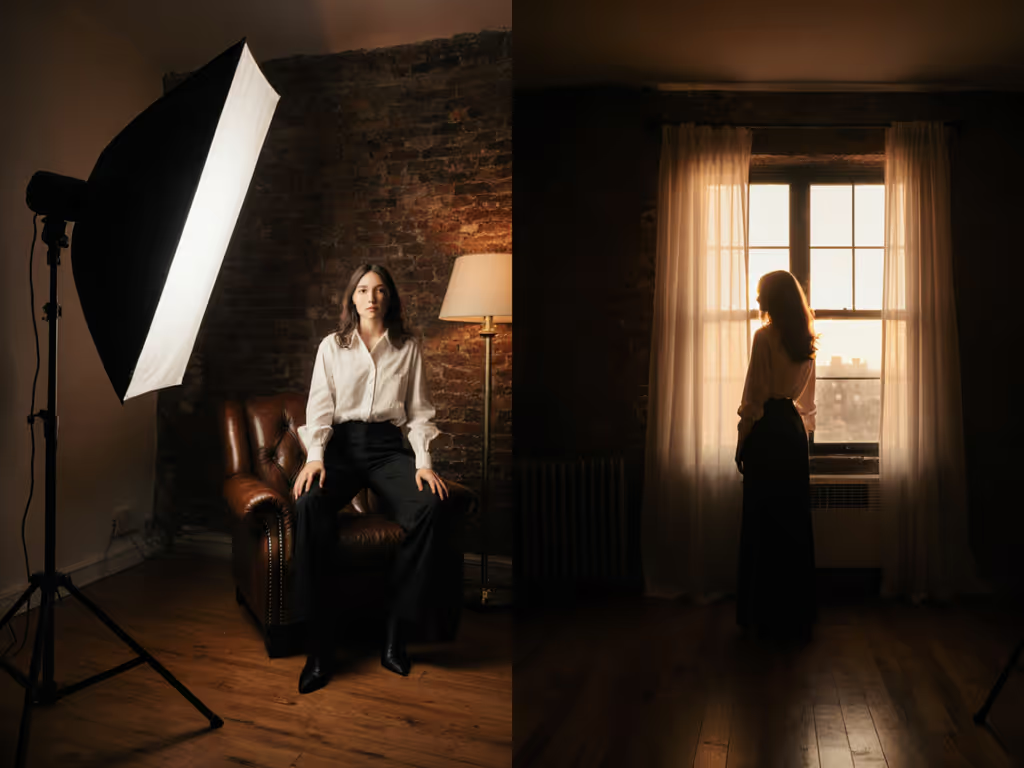
Front vs backlighting and lighting direction comparison are the foundation of visual control. Yet many hybrid creators default to whichever setup feels quickest, losing skin tone flattery, product depth, and most critically, repeatability across sessions. This article walks you through when and why each direction serves your job, with tactical steps you can write into a standard operating procedure (SOP) and use again tomorrow, in a different room, with confidence.
Understanding the Two Directions
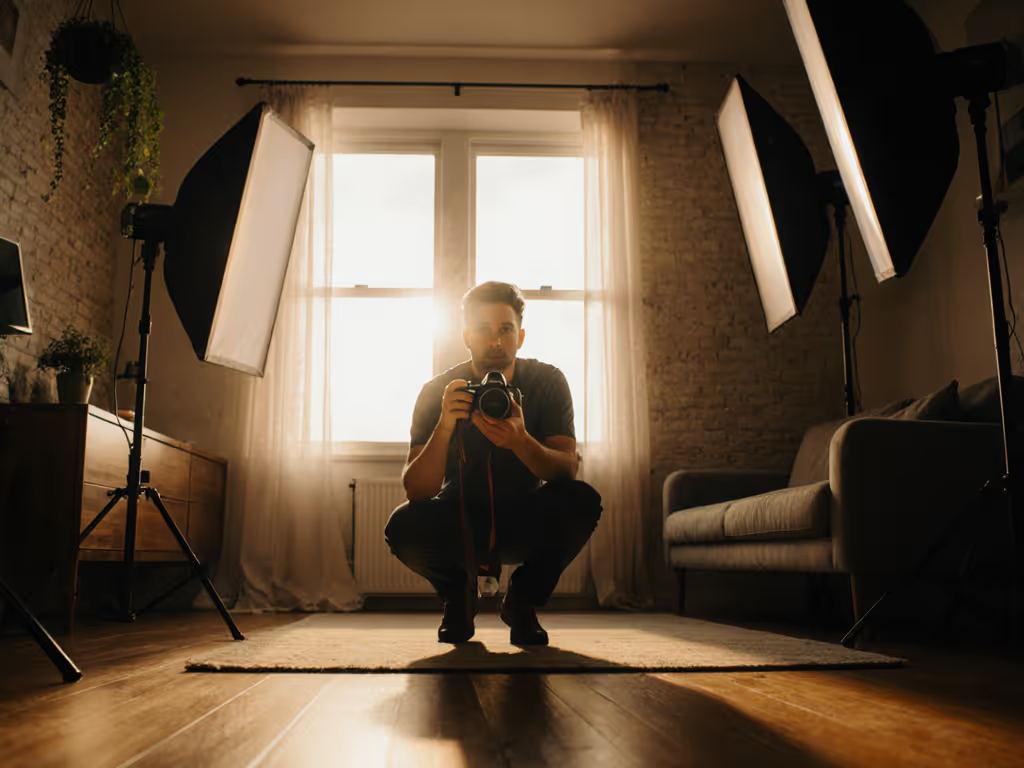
Front lighting (sometimes called key or fill) illuminates the subject's face or front surface toward the camera. Back lighting (rim, kicker, separation light) illuminates from behind or to the side-rear, skimming across edges. For a deeper look at how front, side, back, and overhead placement change results, see our lighting angles guide.
The difference is not aesthetic preference. It is a choice about what information you want visible and where your shadows will live. Front light reveals detail, flatters skin, and controls specularity. Back light separates subject from background, defines texture, and creates silhouettes. Most professional setups use both, but in different ratios and at different power levels depending on the subject and environment.
Why does this matter? Because the moment you move to a new location (a client's shop, a hotel bedroom, a spare office) you need to know instantly which direction to prioritize, how far to place your stands, and what output you need. Improvisation feels faster than planning. Checklists calm chaos; repeatable setups get you there faster, and your color matches from frame one.
Front Lighting: The Workhorse Direction
When Front Lighting Is Essential
Use front light as your primary when:
- Skin tones must be flattering and readable (interviews, testimonials, host segments, portraits).
- Product color must match reality (cosmetics, apparel, food, jewelry, anything where client trust depends on accurate hue).
- You have no floor space for back lights (small bedrooms, tight offices, walk-up apartments with low ceilings).
- Shadows must be soft and placed precisely to avoid under-eye hollows or harsh cheekbones.
- Your subject is glossy (logos on tech products, phone screens, packaging) and you need specular control via distance and angle, not surprise reflections.
Front Lighting Setup: Three Steps (5-7 Minutes)
Step 1: Position Your Key Light (2 minutes)
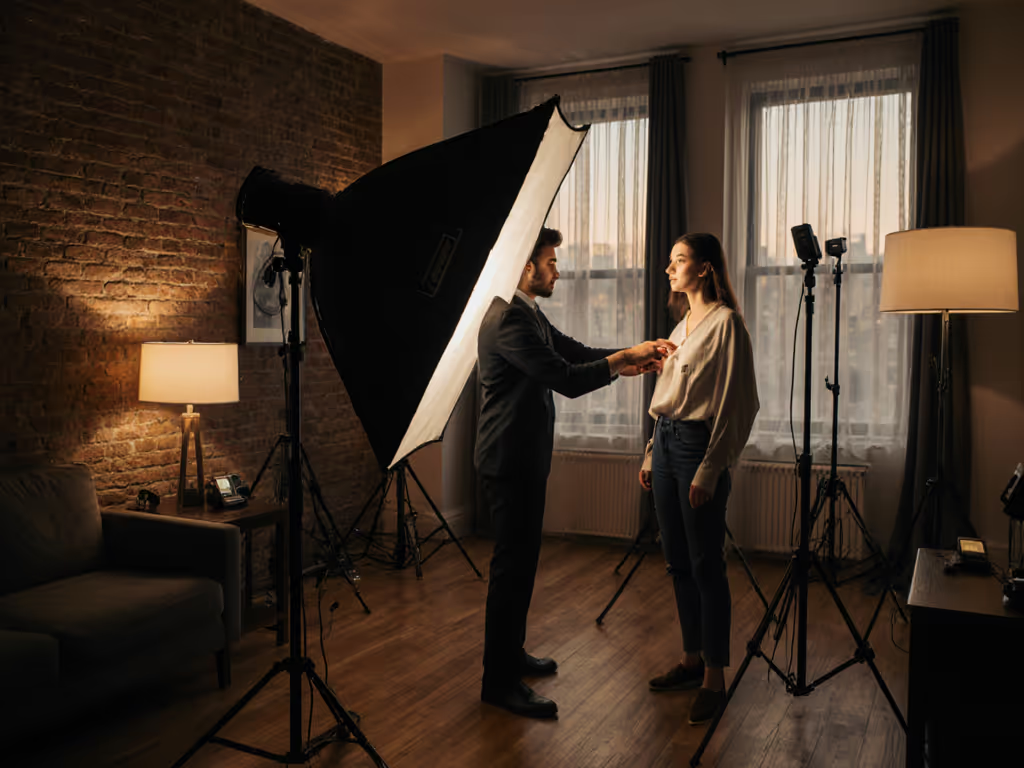
- Place your primary continuous LED or flash at roughly 45 degrees to the subject's face (or product), horizontally offset to camera-left or camera-right.
- Distance: 3-4 feet from talent or subject surface. This distance is your anchor (note it on your checklist). At 3 feet, you'll get soft light with medium falloff. At 6 feet, light is softer but output drops, requiring higher power or wider aperture.
- Height: slightly above the subject's eye line (for talent) or 30-45 degrees down from horizontal (for products on a table).
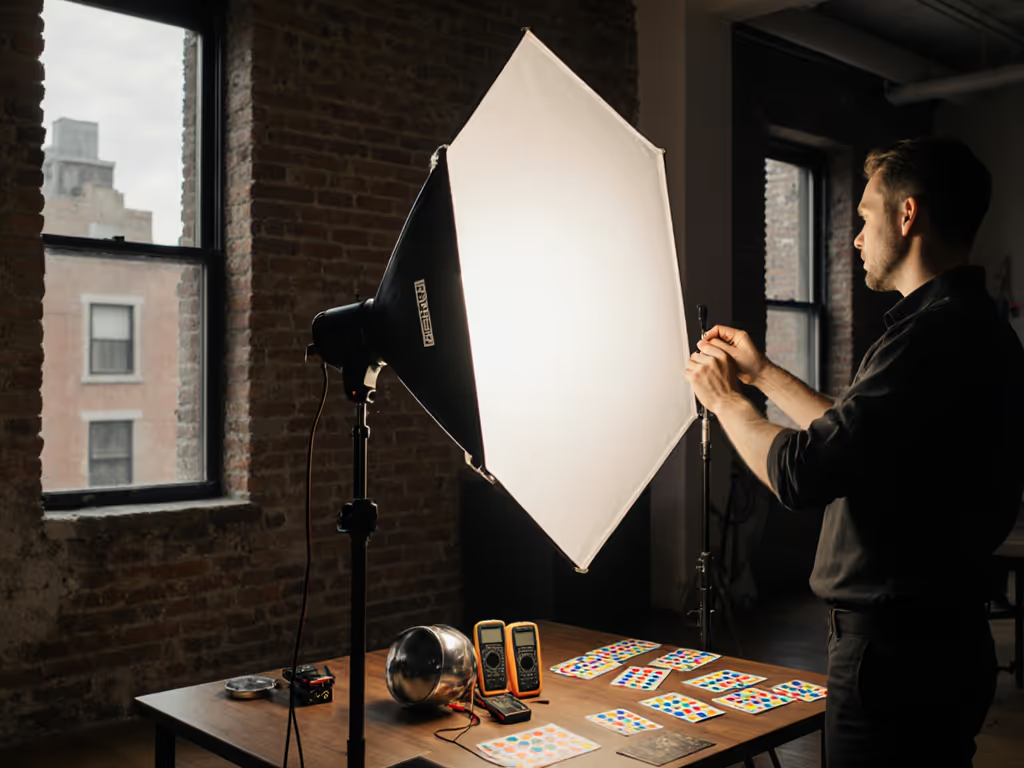
- Meter once. Use an incident light meter held at the subject's face, pointed back at the light. Record the lux or EV. Example: Key at 3 ft, 45° left, 3000K, 1000 lux. This is your baseline. If you return to this shoot, recreate this meter reading first. Your camera's auto ISO will adjust for small room variations; your meter ensures color and exposure anchor.
Step 2: Add Fill or Reduce Shadow (2 minutes)
- Option A: Place a white or silver reflector or fill board on the opposite side of the key light, at least 2 feet away, angled to bounce light into shadow areas (under eyes, side of face).
- Option B: Use a second light at lower power (50-75% of key output) at the same distance, positioned opposite the key, to fill shadows without creating a second hard shadow.
- Option C: In small spaces with power limits, use white walls or white foam board as passive fill. No second power draw; 1-2 minutes to position.
- Meter the shadow side of the face or product. You want a ratio of roughly 2:1 (key to fill), meaning key reads 1000 lux and fill reads 500 lux. This ratio is flattering for most skin and readable for most products.
Step 3: Verify Color Temperature (1 minute)
- Check your lights' kelvin spec (printed on the fixture or in your SOP). Most continuous LEDs are 3200K (tungsten), 5600K (daylight), or adjustable 3200-5600K.
- If you have a color checker or gray card, place it in the light, take a test photo, and set your white balance in-camera. Do this once per location. Do not rely on auto white balance if you're shooting both stills and video; you'll get shifts between clips.
- Write the color temp used on your meter notes. Example: 5600K key, scene WB set to 5600K, incident 1000 lux. Next time, you know exactly what to dial in.
Front light flatters because it shows the subject as the eye expects - well-lit, legible, and within normal shadow ratios we see in daylight or indoor ambient.
Back Lighting: The Dimension Direction
When Back Lighting Transforms Your Image
Use back light (rim, separation, kicker) when:
- The subject must separate from the background (subject and background are similar in tone or color (think a person in a white shirt against a light wall)).
- Texture and detail matter more than flattery (hair, fabric weave, product materials, wood grain, jewelry metalwork).
- You're creating a "silhouette" or high-key look and need rim light to define edges without front-light harshness.
- Your ambient background light is flat (overcast day, interior with no windows) and you need visual depth.
- You have 8-9 ft or higher ceilings and floor space for a second stand; back lights require clearance behind the subject and distance from the camera.
Why Back Light Works: The Physics
When light comes from behind or to the side-rear, it skims across the subject's edge toward the camera. This creates a bright rim or halo, especially on translucent surfaces (hair, fine fabric, skin) and reflective surfaces (product packaging, chrome, glass). The result: the subject appears to pop from the background because the background remains dark while the subject edge glows. This is rim lighting (a workhorse in film and product shoots).
Back Lighting Setup: Four Steps (7-10 Minutes)
Step 1: Place the Back Light Stand (3 minutes)
- Position the stand 3-4 feet behind the subject, to the side (left or right, opposite the key light if using both).
- In tight rooms (8 ft ceilings, small apartments), the back light often sits on the floor, at a low angle (15-30 degrees up), aimed at the subject's edge or the back of the product.
- In rooms with higher ceilings and floor space, mount the back light 5-7 feet high to create a rim across the top of the head or the top edge of the product.
- Move and measure: walk to where the camera is positioned. Look toward the subject. Can you see the back light in the frame? If yes, reposition it out of view (shift left, right, or lower angle). You never want the light source itself visible unless intentional (e.g., motivation for a practical light).
Step 2: Angle and Focus the Beam (2 minutes)
- Angle the back light so it grazes the subject's profile or back surface at 45-90 degrees relative to the camera's line of sight. A light coming from directly behind (camera–subject–light in a line) creates a rear halo. A light 45 degrees to the side creates a side-rim (often more flattering for portraits).
- If your LED is dimmable and has a beam angle (e.g., 40° vs 60°), narrower beams (40°) are easier to control in small spaces; they don't spill onto the background or camera as much.
- For products, angle the back light to skim the edge of the packaging or the silhouette of the product, avoiding direct reflection into the camera lens (which causes flare).
Step 3: Meter and Balance (2 minutes)
- Meter the back-lit edge of the subject. The back light should be brighter than the front key to create visual separation. A common ratio: key at 1000 lux, back light at 1200-1500 lux. This ratio makes the rim visible but not overwhelming.
- Record: Back light at 4 ft, 45° side-rear, 5600K, 1300 lux. Ratio key:back is 1:1.3.
- If the back light output is too high, your subject loses detail (blown-out highlights) and looks unnatural. If too low, the back light adds nothing; save the power and the stand space for a reflector or closer key light instead.
Step 4: Check for Spill and Flare (1 minute)
- Step to the camera position. Point the camera at the subject and preview. Does the back light edge appear in the frame? Does it flare on the lens? If yes, either move the light out of view, use a lens hood, or add a small flag (black card, foam board, or C-stand arm with black fabric) between the back light and the camera to block direct rays. This is a 30-second fix but essential in small rooms where every inch counts.
- For products, especially reflective ones (cosmetics, tech, glass bottles), the back light may create unwanted specular highlights on the product surface itself. If this happens, rotate the product slightly, move the back light further to the side, or use a diffusion frame in front of the light to soften the edge and reduce hotspots.
Comparison: Front vs Back in Practice
Skin Tones
- Front light: Reveals skin color accurately, allows even lighting across the face, flatters with soft shadows.
- Back light alone: Silhouettes the face, hides detail, reads as a rim or halo but not color or expression.
- Combined (key + back): Front light flatters and reads the face; back light separates from background and adds dimension. This is the standard for interviews, testimonials, and host pieces. To refine portrait results, compare five classic studio lighting setups and how they balance key and rim.
Product Texture
- Front light: Shows product shape and color; may flatten texture if angle is head-on.
- Back light: Defines material edges, creates depth, reveals weave/grain/metallic quality.
- Combined: Front light shows color and branding; back light shows craftsmanship and material. Ideal for e-commerce and hero shots.
Environment Control
- Front light: Easier in small rooms; single stand, standard reflector. Works with 6-7 ft ceilings.
- Back light: Needs space behind subject and ideally higher ceilings (8 ft+) or creative low angles. More challenging in apartments or walk-ups.
- Small-space solution: Use back light at a very low angle (floor-mounted) behind a product on a table, or skip it entirely if spill and space are constraints. Prioritize front-light color accuracy and side-fill (reflector) over dimension.
Your Step-by-Step Decision Framework
Before You Light: Ask These Three Questions (30 seconds)
-
What is the subject's primary color? If it's a person's face or a product where hue accuracy is non-negotiable (client will compare to real-world reference), front light first. If it's a secondary scene, a b-roll shot, or a detail where texture and dimension matter more than exact color, back light can dominate.
-
How much floor and ceiling space do I have? Measure your room's height and the square footage behind your subject. If you have less than 4 feet behind the subject or ceilings under 7.5 feet, rely on front light and passive fill (reflectors, white walls, foam board). Avoid back light stand placement if space is tight, you risk tripping hazards, unsafe rigging, or blocking exit paths.
-
Am I shooting photo, video, or both? If both, start with front light at a standard color temperature (5600K daylight or 3200K tungsten) and record that in your notes. Back light can be adjusted shot-by-shot for variety; front light should remain consistent to hold color across stills and video. Not sure whether to use continuous lights or strobes for this job? See our continuous vs strobe comparison for strengths and trade-offs.
The Setup Checklist (Copy This into Your SOP)
Pre-Light (5 minutes)
- Measure ceiling height and floor space behind subject
- Decide: front light only, or front + back?
- Check all light fixtures for kelvin spec and power output (watts or lux at 1 meter)
- Verify power availability; confirm no shared circuits or breaker trips on your selected outlets
Front Light Setup (5 minutes)
- Position key light at 45°, 3-4 ft from subject
- Meter key light at subject position; record lux and angle
- Position fill (reflector or secondary light); meter shadow ratio (target 2:1)
- Set white balance in camera using gray card or color checker under front light
- Record: key distance, angle, kelvin, fill type, incident meter reading
Back Light Setup (optional, 7 minutes)
- Confirm space behind subject; position stand out of camera frame
- Angle back light for edge skimming (45° or direct rear)
- Meter back light; target ratio vs. key (1:1.2 to 1:1.5)
- Check for lens flare or spill onto background; add flag if needed
- Record: back light distance, angle, kelvin, meter reading
Test and Lock (5 minutes)
- Shoot a test frame (photo) or 10 seconds (video) with the gaffer present
- Verify exposure (histogram centered for skin or product mid-tone)
- Verify white balance (gray card in-camera, no green or magenta cast)
- Verify no flicker or banding (video: confirm shutter angle matches frame rate; no PWM artifacts)
- Lock stand positions with tape or floor markers (gaffers' tape on floor at stand feet)
- Signal crew: "Lights locked. Ready to roll."
Practical Example: Product and Talent in One Room
Imagine a branding shoot: you have six different product angles and two talent interviews to capture before lunch in a client's office with 8-foot ceilings and limited floor space. Instead of improvising setups between scenes, I once taped a mini floor plan on the back of a call sheet, marking where my stands lived, labeling each stand position with the color temperature (3200K or 5600K) and expected output (printed in kelvin and lux). For the first angle, I placed my key light at the marked position for Product Stand A, metered it once, and recorded the reading. For the second angle (Product Stand B), I moved the stand to its marked position, metered again, and noted any adjustment. By the third product, the gaffer knew the rhythm; by the talent interview, we had already locked the key light position from the SOP and added a back light (high ceiling gave us room), separated them from the plain office wall, and stayed on schedule. Our colors matched from frame one. The team relaxed because setup felt controlled, not chaotic.
That repeatability (know where the light goes, meter once, record it) is what transforms a rushed, stressed shoot into a predictable, confident job.
Actionable Next Steps
-
Choose one primary subject type you shoot regularly (portrait, product, interview, or hybrid). Write a one-page SOP for that subject using the checklist framework above. Include a small sketch showing stand positions, angles, and typical distances in your room.
-
Meter and record your next three shoots, no matter how familiar the room feels. Write down: key light distance, angle, kelvin, fill type (reflector or light), incident lux reading, and ratio. Store these notes in a simple spreadsheet (subject type, room size, light model, meter reading). After three to five jobs, patterns emerge. You'll notice, for instance, that "5600K key at 4 feet in offices yields a 1000 lux, and the fill reflector at 2 feet reduces shadow to 500 lux." Now you have a rule you can apply immediately to your sixth shoot.
-
Invest 10 minutes in a small floor plan sketch for your most frequent location (home studio, client office, or favorite hotel). Mark ceiling height, window position (if any), available outlets, and your standard stand positions for front and back light. Print it. Next time you shoot there, set up in half the time.
-
Test your ambient light one morning. Measure the color temperature of your room's practicals (ceiling fixture, desk lamp, window light at different times) using your camera's white balance picker or a color meter if you have one. Write down which color temps are not changeable (old tungsten ceiling fixture, for instance) and plan your LED color to match or complement them. This small reconnaissance cuts green spikes and magenta shifts by 80%.
Checklists and standard operating procedures are not about rigidity (they're about clarity). Once you know where your light goes, how bright it is, and what color it is, you can adjust confidently. The next day, in a different room, you start with a proven foundation instead of a blank slate. That's how repeatable beats heroic improvisation, and how you deliver brand-consistent color and composure to every client, every location, every time.
Related Articles