Volumetric Fog Lighting: Machine vs. Natural Techniques
By Aisha López • 12th Apr
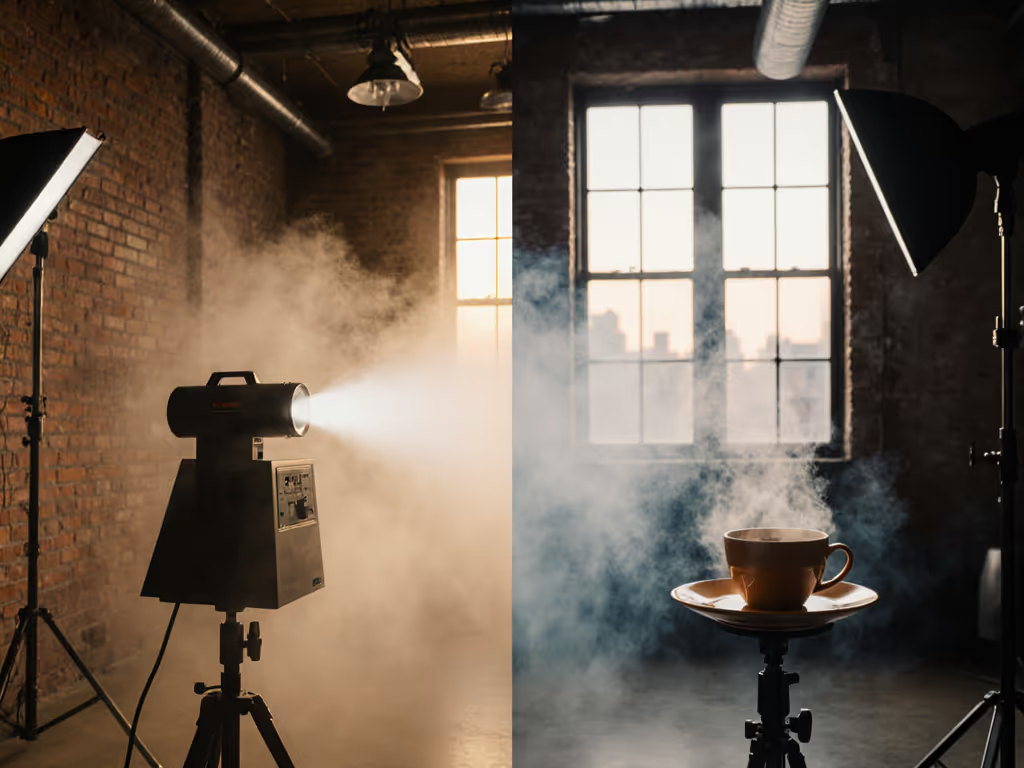
Volumetric fog lighting creates depth, drama, and dimensionality in tight spaces, but the method you choose determines your power budget, footprint, and repeatability. Machine-generated haze and naturally sourced mist each solve different problems. This framework cuts through the romance of fog and lands on what actually works in real rooms with real constraints.
I once rebuilt an entire e-comm kit mid-sprint because a rental breaker panel was ancient and the budget was tighter than expected. Three lights, two batteries, one collapsible modifier (cross-brand). We needed fog for atmospheric depth photography, and a haze machine was out of reach. We backlit with a narrow-beam fixture and layered practical mist from a spray bottle. The result: authentic depth, silent operation, under-budget power draw, and a look we could repeat in the next city without adapting the whole rig. That job taught me that the best setup isn't always the one with the most gear, it's the one that respects your constraints.
1. Power Footprint: Haze Machines Demand Dedicated Circuits
Haze machines consume 1500-2000W and generate heat. If you're unsure about circuit limits or safe load distribution, review our studio electrical safety guide. Rentals often draw 15A @ 120V continuously, which means a dedicated outlet or a full circuit in most residential spaces. Natural techniques (backlit fixtures and practical mist) layer onto existing LED kits and require no additional infrastructure.
Machine approach:
- 1500-2000W draw; triggers breaker if daisy-chained with other gear
- Warm-up time (5-15 min)
- Continuous power or battery rigging is impractical
- Ideal for: studio rental, client space with confirmed power
Natural approach:
- Backlit fixture: 50-200W depending on output
- Mist source: spray bottle (0W) or portable fogger (100-300W)
- Runs on shared circuits; stacks with existing lights
- Ideal for: apartments, hotel rooms, locations without tech support
Verdict: If you work in spaces where "confirm the breaker" is a luxury, natural techniques preserve your kit's flexibility and your professional credibility.
2. Scattering & Directionality: Beam Angle Defines Visibility
In software volumetric rendering, scattering strength and attenuation control how light behaves in fog. On set, this translates to beam spread. A narrow-beam light (8-15° spread) punches through haze visibly; a wide diffuser spreads light, and fog reads as ambient wash instead of volumetric structure. For shaping spill and beam edges, compare softbox shapes for product lighting.
Machine (haze) characteristics:
- Fog particles are small and uniform; light must be shaped to sculpt them
- Narrow beam (5-15°) creates sharp, crisp rays
- Works with any light (tungsten, LED, HMI)
- Requires distance: dense haze at 10 ft+; sparse at 4 ft
Natural (mist/backlit) characteristics:
- Larger droplets scatter light more aggressively
- Works with narrower angles (8-20°) for better definition
- Practical benefit: built-in diffusion reduces hotspots
- Effective in tight spaces (6-8 ft)
Measurement guide:
- Haze machine: typically 1500 lux at 10 ft through medium fog
- Backlit narrow beam (50W LED, 12° reflector): ~800 lux at 6 ft through natural mist
- Both visibly volumetric at studio ISO (100-400)
Verdict: Natural mist excels in cramped spaces because larger droplets and close proximity amplify even modest backlight. Machines scale better across larger sets.
3. Setup Time & Portability: Haze Machines Add 20-30 Minutes
Haze machines require assembly, warm-up, placement, and cable management. Natural fog (a spray bottle or small ultrasonic humidifier) integrates into your existing kit.
Machine setup:
- Unbox, place on a stable surface (away from light heat), plug in, wait 10-15 min
- Position remote or wired control
- Test density, adjust flow
- Total time: 25-35 min before first take
- Transport: 15-25 lbs, bulky case
Natural setup:
- Position backlight (existing fixture, new angle)
- Place spray bottle or portable fogger on set (gels or bounce cards to hide it)
- Spray/mist in real time or before camera roll
- Total time: 5-8 min
- Transport: Spray bottle (1 oz) or USB fogger (8 oz, <1 lb)
Small kit, big control; every watt has a job.
On tight-turnover shoots (product photography, social content drops), every minute compounds stress and fatigue.
Verdict: If your turnaround is under 30 min per set, natural mist keeps rhythm. If you're in a studio day, haze machines' consistency is worth the setup.
4. Color Stability & CRI: Haze Machines Preserve Light Quality
Haze particles do not absorb or shift color. If you're deciding between continuous vs strobe lighting, this affects how you plan haze density and exposure. Your light's CCT and CRI pass through unchanged. Natural mist from water introduces no color cast, but spray bottle overspray (tap water) can leave mineral deposits on lenses and create unpredictable scattering variance.
Machine (haze):
- Particle size optimized for consistent scatter
- No color shift; CRI pass-through preserves your light's quality rating
- CRI 90+ lights remain CRI 90+ through haze
- Repeatability: same fog density = same light behavior
Natural (mist):
- Water vapor is neutral (no color shift)
- But inconsistent droplet size -> uneven scatter -> perceived color drift
- Practical issue: mineral buildup on optics (especially in hard-water regions)
- Spray angle and distance vary shot-to-shot
Pro tip for natural mist: Use distilled water; spray from behind or off-axis to avoid lens contamination. Multiple light passes are normal.
Verdict: Machines guarantee color consistency across a full shoot day. Natural techniques require discipline and re-spray precision.
5. Noise & Flicker: Haze Machines Generate Ambient Drone
Haze machines produce 75-85 dB (vacuum pump, heater) continuously. In video sync sound (interviews, ASMR, voiceover), this is a fatal flaw. Natural methods are silent.
Machine noise profile:
- Pump/fan: 75-85 dB sustained
- Audible on wireless mic from 15+ ft away
- Requires: separate room, sound isolation, or post-production removal
- Video impact: must run between takes or accept audio scrubbing
Natural mist noise profile:
- Spray bottle: 0 dB (mechanical click, negligible)
- USB fogger: 40-50 dB (very low hum, usually not recordable)
- Silent during live recording
Flicker hazard: Neither haze machines nor mist cause flicker. However, backlit fixtures (if AC-powered LEDs without ballast compensation) may flicker at fast shutter angles. Choose flicker-free LED fixtures rated for 24p-60fps. For field-tested, quiet options that won't intrude on audio, see our quiet portable video lights.
Verdict: For sync-sound video, natural mist is mandatory. For stills-only or post-sync audio work, haze machines are tolerable with mitigation.
6. Repeatability & Documentation: Machines Are Easier to Calibrate
Haze machines have a dial or remote control; you set "density level 5" and get the same result every time. Natural mist is manual: spray count, distance, angle, all memory-dependent.
Machine repeatability:
- Flow setting (0-10 scale or %) corresponds to visible fog load
- Same setting + same light distance = same luminous depth
- Photo/video: shoot reference frame with density level for recall
Natural repeatability:
- Requires written protocol: "3 passes with spray bottle, 2 ft from subject, 45° angle"
- Test shot to verify density
- Lighting notes essential for multi-day shoots
- Risk: crew member forgets the rhythm; fog is thinner/thicker on take 5
Framework for natural mist (pocket-sized checklist):
- Mist source: Distilled water, spray bottle or USB fogger
- Distance: 18-24 inches from subject
- Angle: Off-axis; avoid lens direct
- Passes: 2-4 full passes per take
- Backlight specs: Fixture model, wattage, distance to subject, aperture/ISO target
- Photo reference: Density frame clipped to notes
Verdict: Machines scale to multi-operator, multi-location shoots. Natural mist demands discipline but works beautifully for solo or small-crew jobs.
7. Cost & Rental vs. Ownership: Haze Machines Are Budget Constraints
Rental haze machines: $75-150/day + delivery. Owned haze machine: $400-1200. Natural mist kit (spray bottle, USB fogger, distilled water): $30-80 one-time.
Machine economics:
- Rental: 2-3 days of rental = breakeven ownership cost
- Ownership: electricity (<$1/day), fluid refill (~$2/use), cleaning/maintenance
- Risk: damage/loss liability on rental contracts
Natural economics:
- Spray bottle: $5-10
- USB fogger: $25-50
- Distilled water: $1-3 per gallon
- Near zero maintenance; no rental contracts
Smart constraints beat big carts; portability multiplies reliability.
Verdict: If you shoot fog 2+ times per month, natural mist pays for itself in one rental cycle. Machines remain a case-by-case decision based on client budget or studio availability.
8. Client Expectations & Aesthetic: Haze Machines Look "Professional," Natural Mist Looks "Authentic"
Psychologically, haze machines signal production value (studio, rental gear, investment). If your brief involves smoke or open flame, consult our fire photography lighting safety guide to balance atmosphere with safe practice. Natural mist reads as practical, low-tech, sometimes scrappy, but refreshingly honest in editorial and social content.
Machine aesthetic:
- Uniform, sculptural light rays
- Classic commercial/music video look
- Expectation-setter: client assumes high-end workflow
- Pressure: must deliver pristine color/grade to justify the investment
Natural aesthetic:
- Organic, irregular scatter
- Documentary, lifestyle, indie feel
- Permission to be imperfect; authenticity valued
- Lower grade tolerance; grain/noise may be part of the brand
Verdict: Match the method to the brief and brand. Don't rent a haze machine for a scrappy TikTok if natural mist fits the vibe and saves budget.
Final Verdict: Build a Decision Tree, Not a Binary
The choice isn't "haze machine or natural mist." It's framework first, constraints second.
Choose haze machines if:
- Shoot is studio-based or in a client space with dedicated power and acoustic isolation
- Fog density and consistency are non-negotiable (luxury beauty, hero product shots)
- Budget includes rental line item (or camera package rental includes it)
- Setup time is not a limiting factor
- Crew size is stable and trained
Choose natural mist if:
- Work is location-based (apartments, retail, hotel rooms, co-working spaces)
- Silent operation is critical (sync-sound video, interviews)
- Setup must fit in 5-10 minutes
- Kit travels in a carry-on or backpack
- Authenticity and imperfection are part of the brand
- Power budget is tight (<2000W total circuit draw)
- You shoot solo or with a small, consistent team
Hybrid approach (my go-to): Backlit narrow-beam LED fixture + portable USB fogger. Combines natural mist portability, silent operation, and color control with the precision of a shaped light. Cost: <$200. Weight: <2 lbs. Setup time: 7 min. Covers 80% of jobs.
Every atmosphere you build should fit your constraints, not fight them. Document your recipe. Repeat it. The best shot is the one you can set up, shoot, and move on from without drama. That's when small kit, big control stops being a motto and becomes your competitive edge.
Related Articles